

Quick Summary
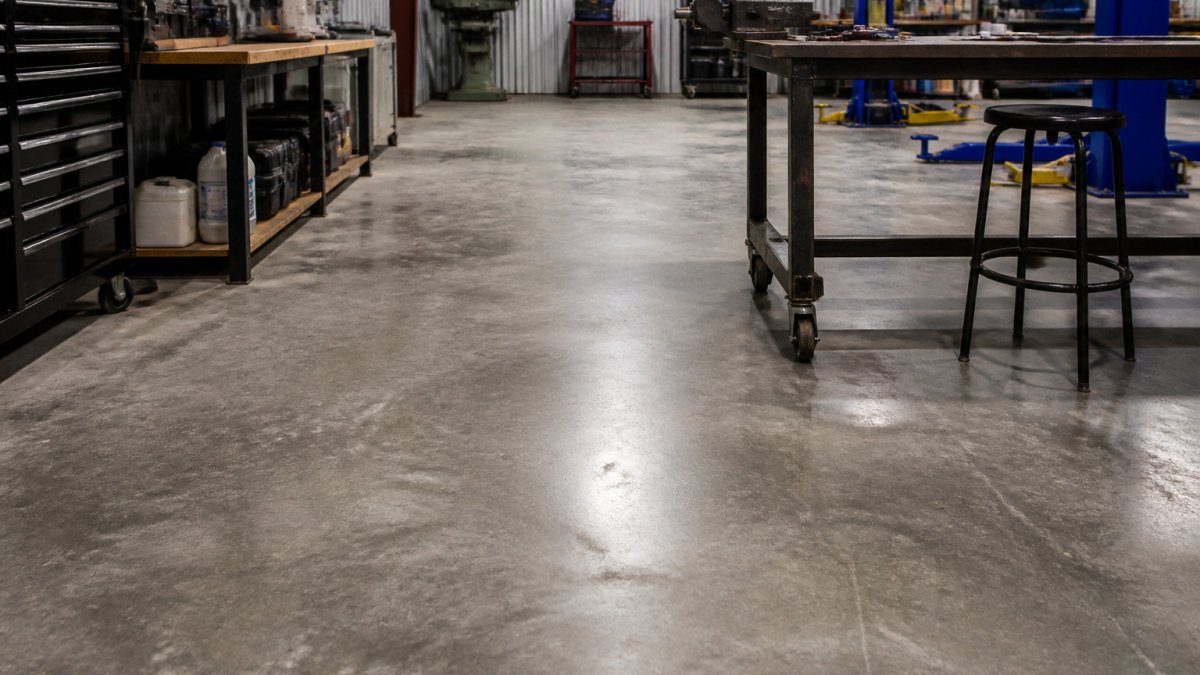
Durable concrete flooring for workshops depends on slab density, thickness and a surface treatment matched to your work, with epoxy as the budget choice and polyaspartic for faster curing and better UV resistance. Proper surface preparation, including grinding, cleaning and moisture testing, decides whether any coating lasts.
- Compressive and tensile strength both matter, so ask for the mix design and placement details.
- Epoxy is the budget-friendly proven choice, but it can yellow in direct sunlight.
- Polyaspartic coatings cure faster and handle UV exposure and temperature swings better.
- Porous slabs need diamond grinding or shot blasting, plus thorough cleaning, before coating.
- Most failed DIY workshop floors fail at grinding or moisture testing, not at the topcoat.
Table of Contents
- What Makes Concrete Flooring Durable Enough for a Workshop
- Types of Workshop Flooring: Bare Concrete, Coatings, Sealers and Tiles
- Epoxy vs Polyaspartic for Workshops: Which Coating Holds Up Better
- Surface Preparation: Why Porous Slabs Need Special Attention
- How to Clean Porous Concrete Slabs and Remove Oil Stains
- Cost of Professional Concrete Floor Sealing and Coating in the United States
- Choosing Your Workshop Floor and Booking a Free Estimate With CTi of Acadiana
- Frequently Asked Questions
What Makes Concrete Flooring Durable Enough for a Workshop
Last Updated: November 2, 2026
Durable concrete flooring for workshops is one of the most practical investments a shop owner or homeowner can make, because a bare slab takes a beating from dropped tools, rolling carts, chemical spills and years of foot traffic. Market researchers at Fortune Business Insights concrete flooring market report project continued growth in concrete flooring through 2034, reflecting how widely these floors are now specified for demanding spaces.
Compressive and Tensile Strength Under Heavy Loads
Compressive strength is the number that matters most for a workshop slab, because it describes how much weight the concrete can carry before it crushes. Tensile strength, by contrast, describes how well the slab resists cracking when it flexes under a load. A floor that supports a heavy lathe or a loaded truck needs both properties in balance. Thickness, reinforcement and proper curing all influence the final result, so a well-poured four-inch slab often outperforms a thinner one that was rushed.
Impact, Abrasion and Chemical Resistance
Impact resistance keeps a dropped wrench from chipping the surface, while abrasion resistance determines how quickly rolling equipment and foot traffic wear through the finish. Chemical resistance is the third test: oil, brake fluid and solvents can etch or soften an unprotected slab. A coating or sealer closes the pores of the concrete and gives you a surface that wipes clean.
Types of Workshop Flooring: Bare Concrete, Coatings, Sealers and Tiles
Workshop floors generally fall into four categories: bare or polished concrete, penetrating sealers, film-forming coatings and interlocking tiles. Bare polished concrete can last the life of the slab because it does not depend on a surface layer that can wear through. Sealers soak into the pores and add modest protection, while coatings build a thicker film that resists stains and abrasion more aggressively. Interlocking tiles are easy to lift and replace, which appeals to renters and people who expect to move. Each option trades off cost, appearance and repairability, so match the choice to how hard your floor will actually work.
Epoxy vs Polyaspartic for Workshops: Which Coating Holds Up Better
For most workshops, epoxy is the budget-friendly and proven choice, while polyaspartic coatings cost more but cure faster and handle UV exposure and temperature swings better. Epoxy can yellow in direct sunlight, so it suits interior bays best. Learn why coatings fail outdoors and how to fix them before choosing. Polyaspartic systems are often preferred for garages with large openings or for projects that need a quick turnaround. Both benefit from grit additives that improve traction.
Curing Time, Slip Resistance and Chemical Exposure
Epoxy typically needs several days before it can take full traffic, whereas polyaspartic can often be walked on within hours, which is a real advantage when the shop must stay open. Slip resistance depends on the texture you choose, and grit additives remain the most common way to add traction in wet or oily areas. Chemical exposure should guide the final decision: confirm the product’s rating against the fluids you handle every day.
Surface Preparation: Why Porous Slabs Need Special Attention
Porous slabs absorb oil, moisture and cleaners deep into the concrete, so surface preparation makes or breaks any coating. Coatings bond through mechanical grip, which means the surface must be profiled to a specified roughness, usually by diamond grinding or shot blasting, and then cleaned thoroughly.
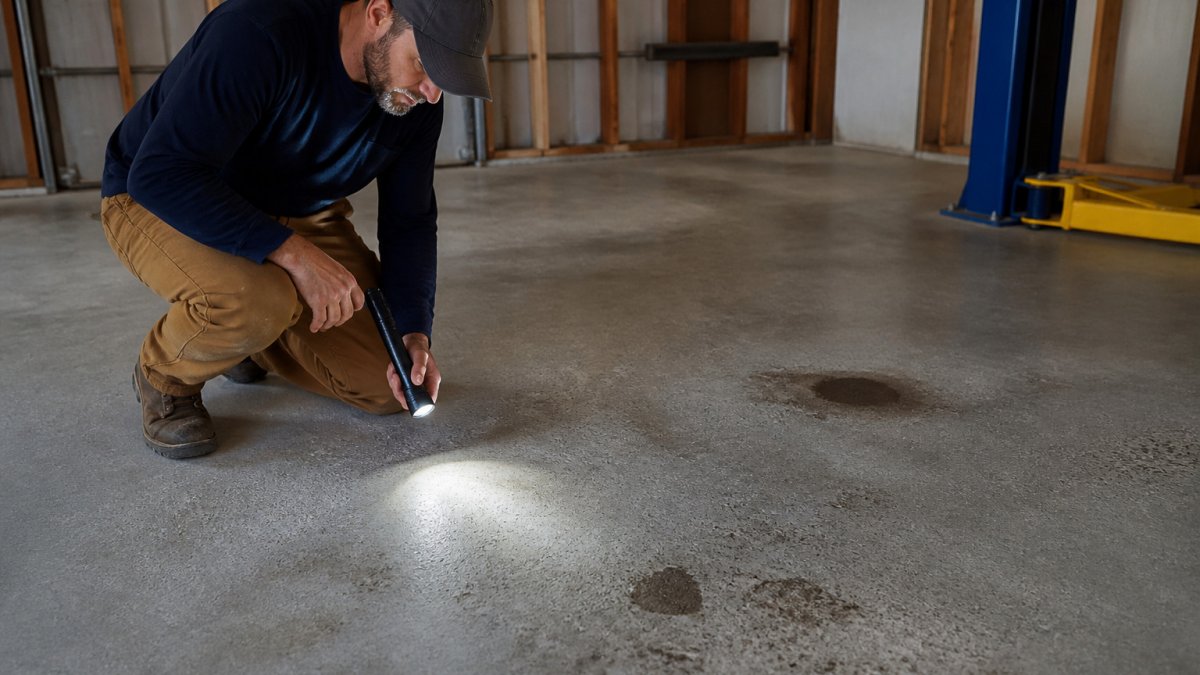
A slab with trapped contaminants will lift, bubble or delaminate within months even if the coating itself is excellent.
Repairing the Slab Before You Coat It
Preparation is also where repairability starts. Cracks, spalls and joint edges should be routed out and filled with a rigid or semi-rigid repair material before any coating goes down, because a coating bridged over a moving crack will telegraph through and eventually split. On a slab with widespread spalling, the repair cost can exceed the coating cost, and that is a signal to consider interlocking tiles or a polished-concrete approach instead of a thin film.
Climate, Curing and Slab Movement
In a workshop that is not climate-controlled, temperature swings cause the slab to expand and contract, and a rigid coating bonded to a moving slab can crack or delaminate at the joints. Preparation should account for slab movement at joints, and the coating should be applied within the manufacturer’s temperature and humidity guidance. New concrete also needs to cure before coating; most manufacturers specify a minimum cure period, and a moisture test confirms whether the slab is ready.
DIY vs Professional Preparation
For a large or high-traffic shop, professional preparation is often the difference between a floor that lasts and one that has to be redone.
How to Clean Porous Concrete Slabs and Remove Oil Stains
Start by sweeping away loose debris, then apply a concrete degreaser to the stained area and let it dwell for the time listed on the label. For a complete step-by-step safe cleaning guide, follow each stage in order. Scrub with a stiff brush, rinse with clean water, and repeat for stubborn spots. Absorbent poultice powders can draw oil out of deep pores before you scrub. Allow the slab to dry completely before applying any sealer or coating.
Cost of Professional Concrete Floor Sealing and Coating in the United States
Because slab condition drives so much of the total, a written quote that itemizes preparation, materials and labor separately makes it easier to compare bids fairly. Before budgeting, see how long concrete resurfacing takes to finish and be usable.
DIY vs Professional Installation: Where the Return Comes From
A DIY coating can save the labor line, but the return depends almost entirely on whether the preparation was done correctly. Most failed DIY workshop floors fail at the grinding, moisture-testing or mixing stage, not at the topcoat, and a redo costs more than the original professional quote would have.
Watch out: a quote that does not list preparation and crack repair as separate lines is usually hiding the cost that will appear later as a change order.
Repairability: What a Patch Actually Costs You
When you compare quotes, ask each contractor how a damaged section would be repaired and what that repair would cost, because that number is part of the true lifetime price.
Climate and Slab Movement: The Hidden Cost Driver
In shops that are not climate-controlled, temperature swings cause the slab to expand and contract, and a rigid coating bonded to a moving slab can crack or delaminate at the joints.
Current pricing for any product or service is best confirmed directly with the provider, and a site visit helps price preparation accurately.
The article breaks down what drives the total cost of a workshop floor, so the main factors are summarised below.
| Factor | Impact on cost | Note |
|---|---|---|
| Preparation and crack repair | Often itemized separately | Missing lines usually become later change orders |
| Repairing a damaged section | Part of lifetime price | Ask each contractor for the repair cost |
| DIY coating | Saves labor only | Failures usually come from grinding or moisture testing |
| Professional installation | Payback via correct moisture testing | Includes specified profile and warranty |
| Climate and slab movement | Hidden cost driver | Joint filling and moisture testing belong in the quote |
| Current pricing | Confirm directly with provider | Site visit helps price preparation accurately |
Choosing Your Workshop Floor and Booking a Free Estimate With CTi of Acadiana
The right workshop floor depends on your slab, your equipment and how you use the space, and a site visit answers those questions far better than a generic guide. You can review our garage floor coating services to see the systems we install for workshops like yours. When you are ready to compare options with real numbers, schedule your free estimate and we will inspect your slab, take measurements and provide a written quote by the end of the business day.
Frequently Asked Questions
What is the most durable flooring for a workshop?
For most workshops, a properly prepared concrete slab with a high-build epoxy or polyaspartic coating offers the best mix of durability, impact resistance and chemical resistance. Polished concrete can last the life of the slab, roughly 20 years or more, because its finish is part of the concrete itself rather than a film that can wear through. Interlocking tiles work well for lighter-duty spaces but can shift under heavy static loads. The right choice depends on your traffic, the equipment you roll across the floor, and how often you handle oil and solvents. Get a written estimate that matches your actual use before committing.
Is epoxy or polyaspartic better for workshop floors?
Epoxy is typically less expensive and gives excellent adhesion and chemical resistance, but it can yellow under UV light and takes longer to cure. Polyaspartic coatings cure much faster, often within hours, resist UV yellowing and handle temperature swings well. Both perform strongly under heavy loads when applied over a correctly prepared surface. For a shop where downtime matters, polyaspartic is often the better fit. For a budget-conscious project with limited sun exposure, epoxy remains a solid choice. Adding grit to either coating improves slip resistance.
How much does professional concrete floor sealing cost?
Pricing depends on the size of the floor, the condition of the slab, the coating system you choose, and how much prep work is needed. CTi of Acadiana, LLC does not publish a fixed price list, because every workshop is measured on site. A free on-site visit includes detailed measurements, and you receive a comprehensive written estimate by the end of the business day, so you know the price before the estimator leaves the property. Visit the company website or request an estimate for current figures that reflect your project.
How do you clean oil stains from porous concrete slabs?
Act quickly. Blot fresh oil with absorbent material, then cover the stain with an absorbent powder or poultice and let it draw the oil up for several hours. Scrub with a degreaser suited to concrete and rinse with clean water. Porous slabs hold oil deep, so older stains may need several rounds or professional treatment. Always test a cleaner on a small hidden area first, because some degreasers can etch or dull the surface. Once the slab is clean and dry, a proper sealer or coating helps prevent future stains from soaking in.
Can you put concrete sealer on a workshop floor?
Yes, sealers can protect a bare slab from moisture, dusting and light staining, but they do not provide the same thickness, impact resistance or chemical protection as a high-build coating. Sealers work best in lighter-duty areas or as a base layer. For heavy equipment, frequent solvent use or rolling loads, a coating system is usually the better investment. Confirm the slab is clean, dry and properly profiled before applying any product, since moisture and contamination are the most common causes of premature failure.
How do you prepare a concrete floor for a workshop coating?
Preparation determines how long the coating lasts. Start by removing old sealers, paint, grease and loose material. Mechanically profile the surface, typically by grinding or shot blasting, so the coating can bond. Repair cracks and spalls, then clean and vacuum thoroughly. Test moisture before applying, since trapped moisture can cause bubbling and delamination. Good preparation is often the largest factor separating a floor that lasts many years from one that peels within months.
What slip-resistant options work best for a workshop?
Adding a grit or aggregate to an epoxy or polyaspartic topcoat is among the most effective ways to improve slip resistance, which is measured by coefficient of friction. Polished concrete offers a different tradeoff, with good durability but lower slip resistance unless textured. Interlocking tiles with textured surfaces are another option. Consider the areas where workers stand while handling liquids, and choose a finish that balances grip with cleanability.

No responses yet