

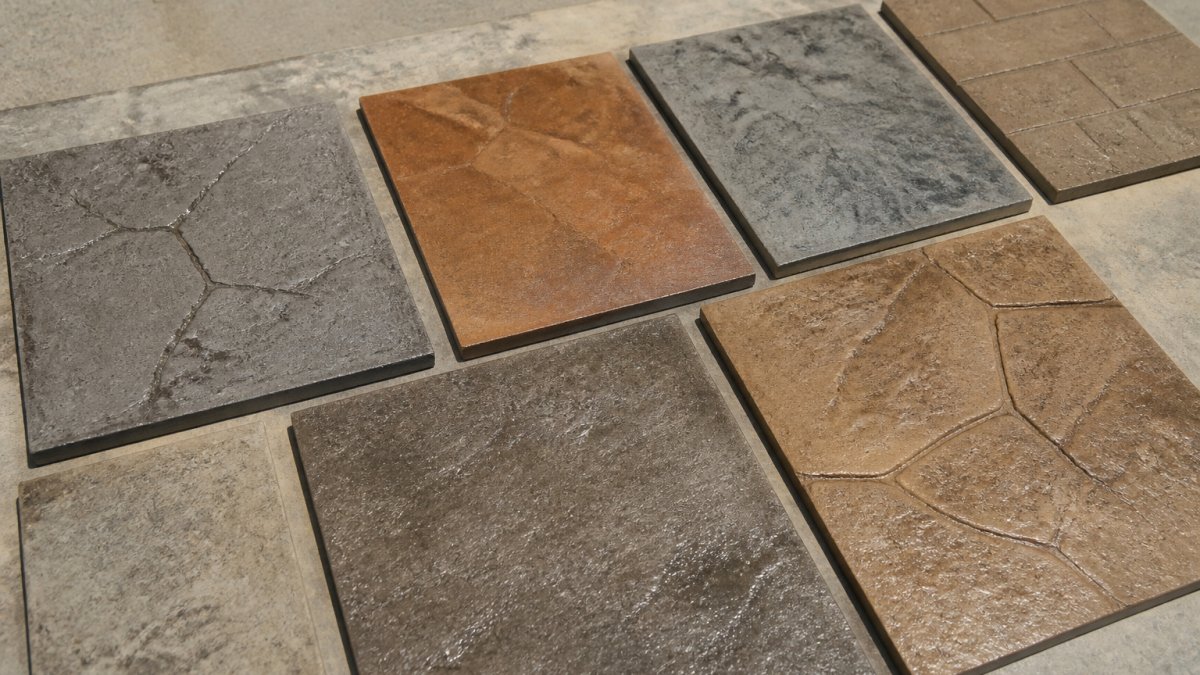
Quick Summary
The best old world concrete alternatives are stamped concrete, pavers, concrete overlays, natural stone, and clay brick pavers, each judged by color variation, texture depth, and pattern irregularity. Stamped concrete and pavers are the two most common routes, but pavers usually reproduce real stone joints more convincingly. The right choice depends on your existing slab and how you use the surface.
- Judge every option by tonal variation, texture depth, pattern irregularity, and softened edges.
- Pavers are flexible and let individual units be lifted and replaced when damaged.
- Stamped concrete needs periodic resealing and its cracks run through the pattern.
- Concrete overlays suit flat, well-bonded slabs but do not fix heaving or settlement.
- Pool decks need slip-resistant textures, since glossy finishes become hazardous when wet.
Table of Contents
- What Makes the Old World Concrete Look Hard to Copy
- Stamped Concrete vs Pavers: Which Gives the Stone Look Best
- Concrete Overlay for Patio Resurfacing
- Low Maintenance Patio Flooring Options Side by Side
- Slip Resistant Pool Deck Finishes
- Booking Your Free Estimate for an Old World Finish
- Frequently Asked Questions
What Makes the Old World Concrete Look Hard to Copy
Last Updated: October 30, 2026
Old World concrete design aims for the look of aged stone, weathered brick or hand-laid tile, and that look is harder to reproduce than it appears.
The core challenge is that real stone varies from piece to piece. Color shifts, edges are irregular, and joints are uneven.
Several factors make the look hard to copy:
- Color variation: Authentic old-world surfaces show tonal shifts across the whole area, not one flat shade.
- Texture depth: Shallow impressions look printed. Deeper, irregular texture reads as aged.
- Pattern irregularity: Repeating patterns give away the trick quickly.
- Edge and joint detail: Slightly uneven joints and softened edges sell the illusion.
This guide compares Old World concrete design alternatives so you can judge them by appearance, cost, durability and upkeep.
Stamped Concrete vs Pavers: Which Gives the Stone Look Best
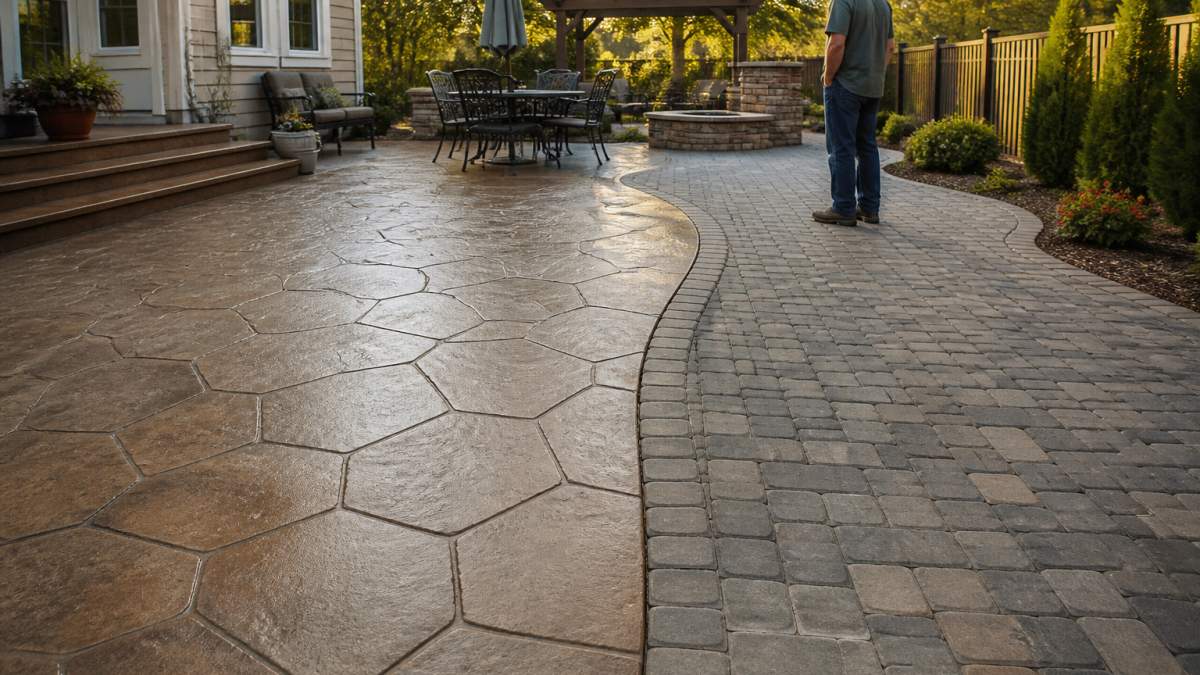
Stamped concrete and pavers are the two most common routes to a natural-stone look, but they fail and succeed in different ways when the goal is specifically an Old World aesthetic. To see how the business’s Stone Classic finish looks in practice, check its appearance against the four traits above. Stamped concrete is a poured slab pressed with texture mats and colored with stains, integral color or color hardeners.
Appearance and Texture: Which Reads as Real Stone
Pavers carry real joints between units, and those joints do most of the visual work.
Stamped concrete has no joints, so the entire illusion rests on the stamp pattern and the color work.
A practical test: stand at the edge of the surface and look across it at a low angle. Real old stone shows color and texture shifts from piece to piece.
Cost: What Drives the Number
Both options are priced per square foot, and both are quoted as installed cost that includes base prep, material, and labor. The drivers differ:
- Stamped concrete cost is driven by slab thickness, reinforcement, the number of stamp patterns used, and the amount of hand-coloring and staining. Complex multi-mat patterns and integral color plus stain take more labor hours than a single-mat job.
- Pavers cost is driven by the unit itself (concrete pavers are typically the least expensive; natural stone and clay brick run higher), the base depth required, and the labor to cut and lay units around curves and edges. Complex borders and herringbone patterns add cutting waste.
Neither option has a single national price, and quotes vary widely by region, access, and site conditions. Ask each bidder to break out base prep, material, labor, and sealing separately so you can compare like with like. A low per-square-foot number that excludes base repair is not a real comparison.
Durability and Lifespan
Stamped concrete is a single continuous slab, so it moves as one unit. That is an advantage where the base is stable and a liability where it is not: a crack in a stamped slab runs through the pattern and is difficult to disguise.
Pavers are flexible. Individual units can shift slightly with freeze-thaw movement without cracking, and a damaged unit can be lifted and replaced. The weak point is the joint sand and the base: if the base compacts unevenly, pavers settle and create trip edges.
Maintenance and Repair
- Stamped concrete: periodic resealing (commonly every few years, depending on climate and sealer type), reapplication of color or stain where traffic wears it, and crack repair that rarely matches perfectly. Repairs are the main long-term frustration.
- Pavers: joint sand replenishment, occasional re-leveling of settled units, weed management in joints, and spot replacement of broken units. The repair itself is straightforward; the ongoing joint upkeep is the trade-off.
Which Wins for an Old World Look
If individual-stone realism and easy repair matter most, pavers with tumbled edges and varied color lots are the stronger choice. If you want a continuous, smoother surface with no loose joints and you have a stable, well-prepped base, a carefully multi-mat stamped and stained slab can hold the illusion. The deciding factor is usually not the material but the installer’s willingness to build in irregularity rather than repeat a single pattern.
Judge both options by the same four criteria: tonal variation across the whole area, texture depth, pattern irregularity, and softened edges. Whichever bidder can explain how they will achieve all four is the better bet, regardless of material.
Concrete Overlay for Patio Resurfacing
A concrete overlay is a thin cementitious layer applied over an existing slab. It is one of the most practical options when your patio is structurally sound but cracked, stained or worn.
Overlays suit slabs that are flat and well bonded. They do not fix heaving, major settlement or structural failure, and a surface that moves will eventually crack the overlay.
Low Maintenance Patio Flooring Options Side by Side
Most comparisons of patio flooring lump structural and decorative options together, which makes the table hard to use. The table below is filtered to surfaces that can plausibly reproduce an Old World stone, brick, or tile look, and it compares them on the criteria that actually decide the project: appearance fidelity, maintenance level, repair method, and where each belongs.
| Option | Old World Look | Maintenance Level | Repair Method | Best Application |
|---|---|---|---|---|
| Stamped concrete | Good to excellent with multi-mat stamping and layered stain | Moderate (periodic resealing) | Patch and recolor; hard to match | Patios, walkways, pool decks |
| Concrete overlay | Good; texture and color applied over existing slab | Low to moderate | Patch and retexture | Resurfacing sound patios and porches |
| Tumbled pavers | Excellent joint realism | Moderate (joint sand, resetting) | Lift and replace individual units | Patios, walkways, driveways |
| Natural stone (flagstone, travertine, bluestone) | Authentic by definition | Low to moderate | Replace individual stones | Patios, walkways, pool surrounds |
| Clay brick pavers | Excellent for brick-look Old World styles | Moderate (sand, efflorescence) | Lift and replace | Walkways, borders, patios |
| Resin stone | Good; product-dependent | Low | Replace panels or units | Light-traffic patios, balconies |
| Decorative vinyl film | Fair; texture is printed | Low | Replace film | Indoor floors only, not exterior |
Reading the Table by Application
The right choice changes with where the surface goes, because slip resistance, weather exposure, and maintenance needs differ:
- Patios and walkways: Stamped concrete, tumbled pavers, and natural stone all work. Pavers and stone handle freeze-thaw movement better; stamped concrete needs a stable base and control joints.
- Driveways: Pavers and stamped concrete are the practical options. Natural stone is usually cost-prohibitive at driveway scale, and overlays are not rated for vehicle loads unless specified.
- Pool decks: Traction is the deciding factor. Textured stamped finishes, broom-finished concrete, and honed natural stone are common; polished or glossy surfaces become hazardous when wet. The business’s pool deck services cover the textures and finishes it offers for these areas.
- Indoor floors: Decorative vinyl film and polished concrete are the realistic Old World-look options; pavers and stamped concrete are exterior systems.
Lifecycle and Environmental Trade-Offs
“Sustainable” is often applied to these materials without context. A more useful comparison looks at embodied carbon, recycled content, permeability, and expected lifespan together:
- Concrete-based options (stamped, overlay): Cement is carbon-intensive, but an overlay reuses an existing slab and avoids demolition waste, which improves its lifecycle profile. Overlays also extend the life of a slab that would otherwise be replaced.
- Pavers: Concrete pavers can incorporate recycled content, and individual units are replaceable, which extends the surface’s life. Permeable paver systems with open-graded base and joint material allow water to infiltrate, reducing runoff.
- Natural stone: High embodied energy from quarrying and transport, but very long lifespan and full reusability.
- Gravel and permeable surfaces: Low embodied carbon and strong drainage performance, but limited for the Old World look unless used as a joint fill or border.
A common pattern is that the lowest-carbon choice is the one that avoids tearing out an existing slab. If your patio is structurally sound, an overlay or a resurfacing system usually beats a full replacement on both cost and lifecycle impact.
Maintenance Expectations by Option
- Stamped concrete and overlays: reseal every few years; recolor worn traffic paths; patch cracks.
- Pavers and natural stone: replenish joint sand, reset settled units, manage weeds, and clean efflorescence on brick and stone.
- Resin stone and vinyl film: minimal routine care, but shorter service life and product-dependent performance.
Do not choose a surface on appearance alone. Confirm the base condition, the slip rating for wet areas, and the repair method before committing, because those three factors drive long-term satisfaction more than the pattern does.
Pricing for every option depends on size, site conditions, and materials chosen, so pricing depends on quantity, dates, and delivery and is best confirmed through a quote. Request a written estimate from CTi of Acadiana, LLC for current prices.
Slip Resistant Pool Deck Finishes
Pool decks need a surface that stays safe when wet. Texture, finish and sealer all affect traction. A polished, glossy surface that looks elegant can become hazardous once water and sunscreen are involved.
Look for finishes that balance appearance with grip. The Hallmark System used by CTi of Acadiana, LLC is designed to be slip safe and easy to care for.
Booking Your Free Estimate for an Old World Finish
Choosing the right Old World look is easier once you see your own space. You can schedule your free estimate online to book the visit.
Before the estimator leaves the property, you will have a price. That means no surprises between the phone call and the final invoice. to compare the Old World finishes that suit your patio or pool deck.
Frequently Asked Questions
What are the best alternatives to traditional concrete for a patio?
The most common alternatives are stamped concrete, pavers, natural stone, resin stone and concrete overlays. Stamped concrete and overlays keep a poured-slab base and are usually less disruptive to install. Pavers and natural stone offer a more distinct texture but cost more and need joint maintenance. Resin stone is a lighter option that suits some patios. Pricing depends on square footage, site prep and finish, so the most reliable way to compare is a written estimate based on a site visit.
How can concrete be made to look old-world?
Old-world looks usually come from texture, color variation and pattern. Stamping can imprint stone or slate patterns into fresh concrete, while staining adds layered earth tones. Overlays can be troweled to create an aged, uneven surface over an existing slab. Combining a darker base with lighter highlights produces the weathered depth that makes the finish read as older stone. A test section helps confirm the color before committing the full area.
Are pavers or stamped concrete better for a patio?
Neither is better in every case. Pavers offer individual replaceable units and a classic brick or stone look, but joints need periodic re-sanding and weeds can grow in them. Stamped concrete is a continuous surface with fewer joints, so there is less to clean, but cracks can appear over time and repairs can be harder to blend. Shade, drainage and budget should guide the choice, and a site visit helps determine which fits the property.
What patio flooring is easiest to maintain?
Low-maintenance patio surfaces are typically sealed, continuous finishes such as stamped concrete with a quality sealer, overlays and coatings. These require occasional cleaning and resealing rather than joint work. Pavers need more attention because joints can shift and need sand. Regular rinsing and prompt crack repair reduce upkeep for any option. Your Hallmark System is designed to be easy to care for and slip safe, so ask about its specific cleaning schedule during your estimate.
Is a concrete overlay a good option for an old patio?
A concrete overlay can be a practical choice when the existing slab is structurally sound but worn, cracked or unfinished. It bonds to the old surface and can be textured, stained and sealed to resemble stone or aged concrete. Overlays are not a fix for major structural failure, so the existing slab should be inspected first. A written estimate that includes a visual inspection and measurements will show whether an overlay is suitable for your patio.

No responses yet