

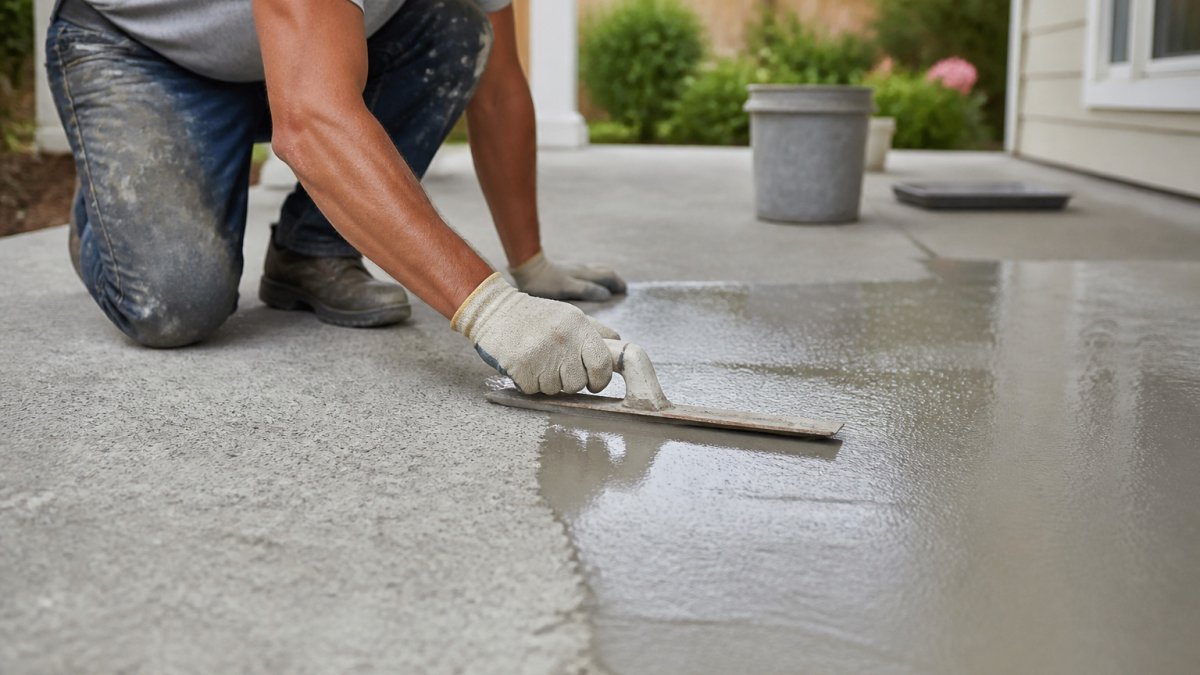
Last Updated: November 1, 2026
Quick Summary
Concrete resurfacing itself usually takes one to two days of crew work, but the surface needs several more days before normal use. Walk-on time, vehicle access and full cure each follow their own clock, so the product label should set the final schedule.
- Most residential concrete resurfacing jobs take one to two days on site.
- Walk-on time for standard resurfacers is about 6 to 8 hours, though some labels say 24 to 48 hours.
- Light vehicle use typically starts around 24 to 48 hours, with regular driving after 7 to 10 days.
- Full cure takes several days to weeks, and normal use should wait for that point.
- Rain, cool temperatures and thick layers can extend every timeline, so check the forecast.
Table of Contents
- How Long Concrete Resurfacing Takes From Start to Finish
- Separating Job Duration, Walk-On Time, Vehicle Access, and Full Cure
- Concrete Resurfacing Dry Time: What Happens After the Final Pass
- How to Resurface a Concrete Driveway: A Step-by-Step Schedule
- Concrete Driveway Curing Time and When Vehicles Can Return
- How Weather, Shade, and Slab Conditions Change the Timeline
- Booking Your Free Estimate and Planning Your Project Window
- Frequently Asked Questions
How long does concrete resurfacing take? For most homeowners the honest answer is that the job itself takes one to two days, but the surface is not ready for normal use for days after that. The short answer depends on which timeline you mean, and confusing them is where most schedules go wrong.
Published guidance on resurfacing products is not uniform, so this guide separates the stages instead of promising one number. Concrete resurfacing is a thin overlay applied over existing slabs, and each stage has its own clock: preparation, application, walk-on time, vehicle access, and full cure. Knowing which clock you are on keeps you from driving on a surface that still needs time.
How Long Concrete Resurfacing Takes From Start to Finish
Resurfacing job duration varies with the project and the product used. Larger areas or complicated repairs can stretch the work further.
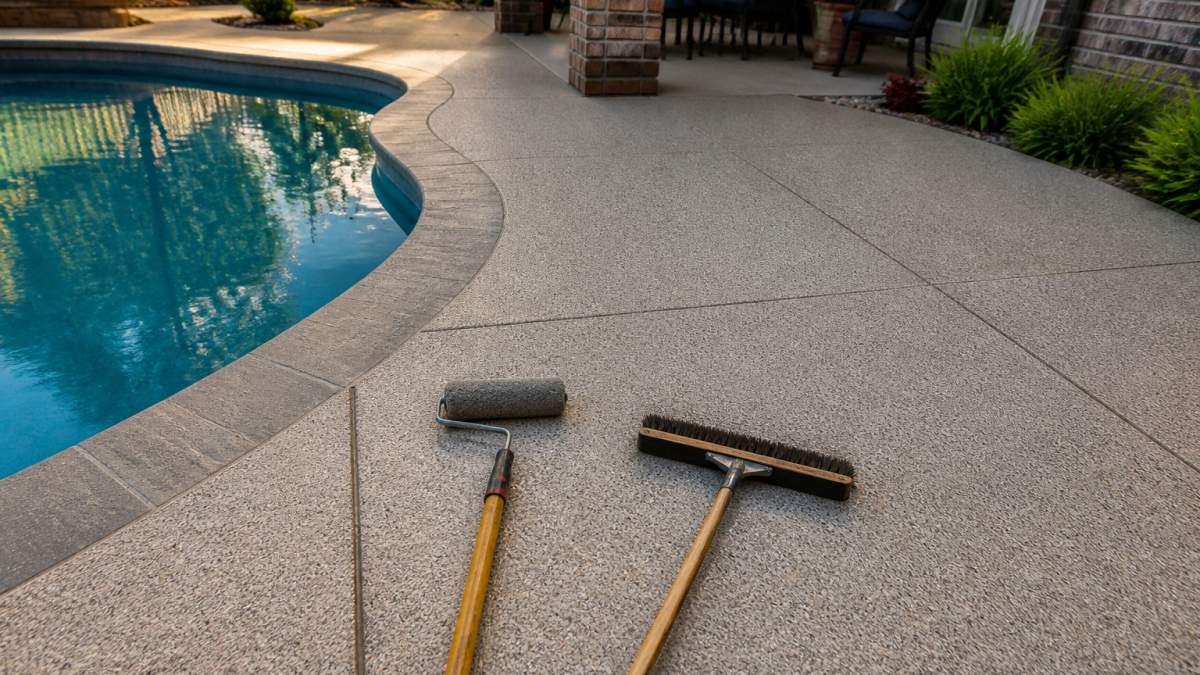
Preparation often takes as long as the application itself. Crews need the slab clean, dry, and free of loose material before the overlay goes down.
Separating Job Duration, Walk-On Time, Vehicle Access, and Full Cure
These four numbers are different, and mixing them up causes most problems. Job duration is how long the crew works. Walk-on time is when foot traffic is generally safe. Vehicle access is when cars or equipment can return. Full cure is when the surface reaches its final strength. A surface that is safe to walk on is not necessarily safe to park on, and a surface that is dry to the touch is not necessarily fully cured.
Use this general framework as a starting point, then confirm every number against the product label:
| Timeline | What it measures | Typical window | What it means for you |
|---|---|---|---|
| Job duration | Crew on site | 1 to 2 days for most residential jobs | Plan to be home or arrange access; keep pets and vehicles clear |
| Dry to touch | Surface set | A few hours after the final pass | Do not judge readiness by touch alone |
| Walk-on time | Foot traffic | About 6 to 8 hours for standard resurfacers; some labels say 24 to 48 hours | Light foot traffic only; no furniture, no standing water |
| Vehicle access | Cars and light equipment | About 24 to 48 hours for light use; 7 to 10 days before regular driving | Start with light, slow vehicles; avoid turning on the new surface |
| Full cure | Final strength | Several days to weeks | Normal use, cleaning, and sealing decisions wait for this point |
Published sources disagree on the exact figures, so treat any single number as a starting point. Walk-on and vehicle-access times vary by product, layer thickness, and temperature, and the product label should set the schedule.
Plan around the longest number that applies to your project, not the shortest. If the label says 24 to 48 hours for foot traffic, schedule furniture and normal use for the far end of that range.
Read the specific product’s instructions before planning. Those instructions override any general estimate, including the ones in this guide.
A practical reopening checklist, in order:
- Confirm the label’s minimum dry time has passed, not just that the surface looks dry.
- Check for soft spots, tackiness, or marks in shaded and low spots.
- Keep rain and sprinklers off the surface for the label’s protected period.
- Allow foot traffic first, then light furniture, then vehicles, never all at once.
- For vehicles, start with one light, slow vehicle and inspect the surface afterward before regular use.
Common causes of delays at this stage include rain during the protected period, cool overnight temperatures, thick layers over repairs, and traffic allowed back too early. Each one pushes the walk-on and vehicle-access clocks, not just the cure clock.
Concrete Resurfacing Dry Time: What Happens After the Final Pass
Dry time is the period between the last pass and the point where the surface is stable enough to handle. Most products set on the surface first, then harden more slowly underneath. Walking too early can leave footprints or scuffs that cannot be fixed.
Keep these points in mind during dry time:
- Keep the surface dry and protected from rain for the period stated on the product label
- Avoid heavy items, furniture, and standing water on the new layer
- Check the surface for soft spots or marks before allowing normal use
- Note that thicker layers generally take longer to cure fully
A common mistake is judging readiness by touch alone. The surface can feel dry while the material beneath is still curing.
How to Resurface a Concrete Driveway: A Step-by-Step Schedule
A typical driveway project follows a predictable sequence. The schedule below is a planning framework, not a guarantee. Your product’s label and your installer’s plan should set the actual dates.
| Stage | Typical Timing | What Happens |
|---|---|---|
| Assessment and measuring | Day 0 | Surface inspected, area measured |
| Cleaning and repair | Day 1 | Surface degreased, cracks filled |
| Application | Day 1 to 2 | Overlay mixed, spread, and finished |
| Walk-on window | About 6 to 48 hours after finishing | Foot traffic only, product dependent |
| Vehicle access | About 1 to 2 days, possibly longer | Light vehicles only after the product’s stated time |
| Full cure | Several days to weeks | Final strength reached |
Plan around the longest number in the table, not the shortest. Rushing the schedule is the most common reason for surface damage.
Concrete Driveway Curing Time and When Vehicles Can Return
Vehicles put the greatest load on a resurfaced surface, so they should wait longest. Published guidance ranges from about 24 to 48 hours for light use to 7 to 10 days before regular driving, and the difference often comes down to product type, layer thickness, and temperature.
Before returning cars to the driveway, check that the surface is hard, not tacky, and free of marks. Start with light, slow vehicles and avoid turning on the new surface. Check the product label to confirm which timeline applies. Our frequently asked questions about vehicle access and aftercare answer common questions about when cars can return.
How Weather, Shade, and Slab Conditions Change the Timeline
Weather is one of the largest variables, and it changes each clock differently. Our cost breakdown for resurfacing a concrete driveway shows how project size and conditions affect the total. Heat speeds surface drying but can shorten working time so much that the material sets before it is finished. Cold, humidity, and rain slow curing or cause surface defects. Wind can dry the surface unevenly. The practical approach is to adjust the schedule by condition rather than apply one generic estimate.
Hot, sunny, windy conditions. Working time shortens, so crews often apply in smaller sections and finish faster. The surface may dry to the touch quickly while the material beneath is still curing, which is why touch tests mislead. Shade the mixed material from direct sun where the product allows, and avoid applying in the hottest part of the day if the label sets a maximum surface temperature.
Cool or cold conditions. Curing slows, and overnight temperatures matter as much as daytime highs. Many products specify a minimum ambient and surface temperature for application and for the first 24 hours. If the forecast drops below that minimum, the walk-on and vehicle-access windows stretch, and full cure can take noticeably longer.
Humid or damp conditions. High humidity slows moisture loss and extends dry time. A slab that stays damp, common on shaded driveways and pool decks, cures more slowly than a sunny patio. Build in a buffer and keep the surface protected from rain for the period stated on the label.
Rain. Rain during application or the protected period is the most common cause of surface defects and do-overs. Watch the forecast for the full protected window, not just the application day, and have a plan to cover the surface if rain arrives early.
Shade. A driveway that stays shaded and damp most of the year will cure more slowly than a sunny patio. Shade also hides soft spots, so check shaded areas first before allowing traffic.
Slab condition. A porous, dusty, or poorly prepared slab can absorb moisture unevenly and need extra time. Existing cracks and spalls that need repair add a full setting day before the overlay goes down. Poor drainage keeps water against the new surface and extends the protected period.
Factors that most often extend the timeline include:
- Rain or high humidity during application or early curing
- Cool temperatures overnight
- Shaded areas that stay damp
- Thick layers or repairs that need extra setting time
- Poor surface preparation or contamination such as oil and dust
- Inadequate drainage that keeps water on the new surface
Do not use ambient air temperature alone to judge whether conditions are suitable. Surface temperature, overnight lows, humidity, and wind all affect working time and cure. Follow the product label’s stated limits and ask your installer how the forecast for your specific dates changes the schedule.
To avoid weather-driven delays, choose a window with stable, dry weather, leave extra days before you need the area back in use, and confirm the product’s temperature and rain-resistance limits before the crew arrives.
Booking Your Free Estimate and Planning Your Project Window
The best way to pin down your own timeline is to have the surface measured and the product selected before you commit to dates. CTi of Acadiana, LLC offers free custom estimates with an on-site visual inspection and detailed measurements, and a written estimate is provided by the end of the business day. You can schedule your free estimate to get a price before the estimator leaves the property.
Planning an entire project takes some thought, so learn how to get a free concrete coating estimate before picking a start date. Choose a window with stable, dry weather, and leave extra days before you need the area back in use.
Frequently Asked Questions
How long does concrete resurfacing take to dry?
Dry time depends on the product and the conditions during application. Standard resurfacers are often ready for light foot traffic within about 6 to 8 hours, while vehicle traffic typically waits 24 to 48 hours. Sources differ on these windows, and some recommend waiting longer before driving. Always follow the specific manufacturer’s instructions for your product, and plan for full cure to take considerably longer than the first day of use. CTi of Acadiana, LLC can review your surface and advise on expected timing during your free on-site estimate.
How soon can you walk on resurfaced concrete?
Many resurfacing products allow foot traffic within roughly 6 to 8 hours of application, though this varies by product and weather. Cooler temperatures, humidity, and shade can extend that window. Avoid placing furniture, planters, or heavy items on the surface until the product manufacturer confirms it is firm. Protect the area from pets and wet footprints during the first day. Read the product label before you walk on the new surface to confirm timing for your specific project.
How long should you wait to drive on resurfaced concrete?
Vehicle access commonly begins 24 to 48 hours after application for many products, while some published guidance recommends waiting 7 to 10 days before driving on a resurfaced driveway. Because these timelines differ, the safest approach is to follow the exact instruction for your product and to consider heavier vehicles and turning movements, which place more stress on the surface. Parking on a freshly resurfaced driveway too early can leave marks or cause damage.
Can my concrete driveway be resurfaced?
Many driveways can be resurfaced if the underlying slab is structurally sound and the surface issues are mainly cosmetic or limited to surface wear. Deep cracks, heaving, or sinking usually need repair before a resurfacing product is applied. Surface preparation, including cleaning and repairing damaged areas, is essential for good adhesion. A professional on-site inspection and measurement can help determine whether your driveway is a good candidate. Request a free estimate from CTi of Acadiana, LLC to have your concrete evaluated in person.

No responses yet