

Quick Summary
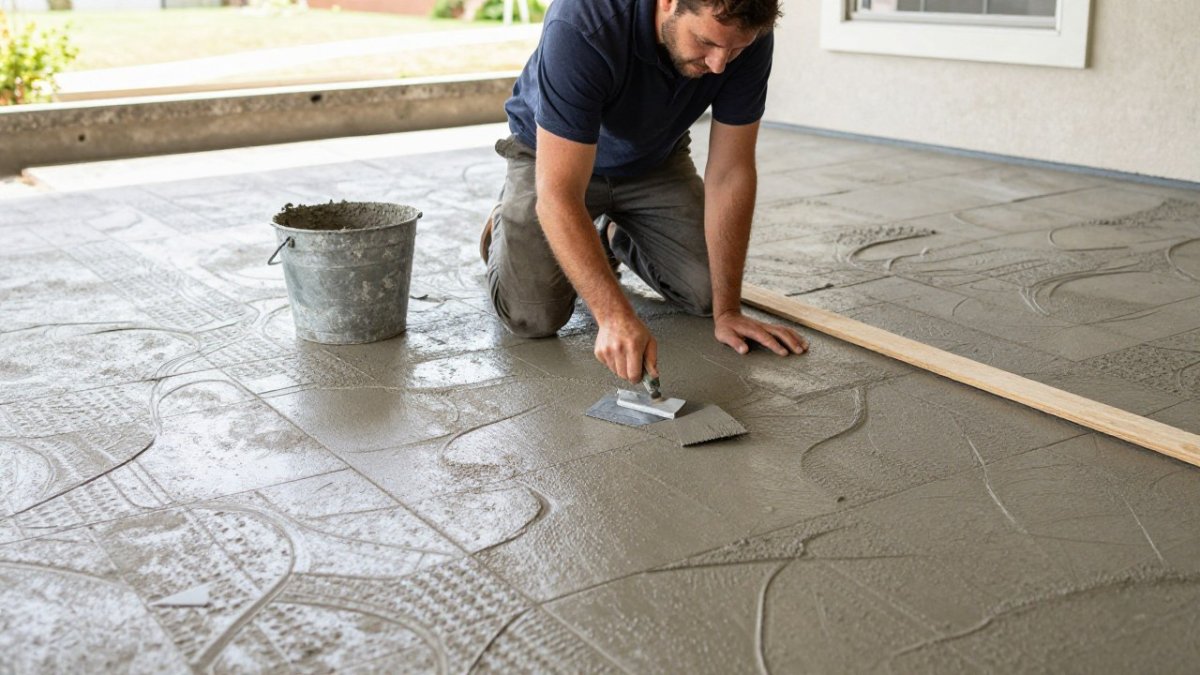
Flooring alternatives for homeowners are finishes that improve existing concrete, such as stained concrete, decorative overlays, stamped textures and textured pool deck coatings, instead of full replacement. Proper surface preparation is what determines how long each finish lasts.
- A worn slab can be resurfaced rather than torn out.
- Preparation is the most common reason a coating fails early.
- A thin coating over a cracked slab will show the cracks through the finish.
- Textured pool deck finishes give traction when wet, while glossy coatings can become hazardous.
- Ask for a written estimate that lists scope, materials and labor separately.
Table of Contents
- Why Homeowners Look Beyond Plain Concrete
- Concrete Patio Alternatives That Hold Up Outdoors
- Pool Deck Finishes That Stay Slip-Safe
- Comparing Flooring Alternatives Side by Side
- What Extraordinary Flooring Alternatives for Homeowners Cost
- Environmental Impact, Subfloor Needs and Resale Value
- Booking Your Free On-Site Estimate
- Frequently Asked Questions
Why Homeowners Look Beyond Plain Concrete
Last Updated: November 19, 2026
Plain concrete is cheap, but it rarely stays good-looking for long. Cracks open, the surface dusts and stains, and a patio or pool deck that looked fine at installation can start to feel tired within a few seasons. That is why many homeowners in Acadiana now look at flooring alternatives for homeowners as a way to improve the look and function of existing concrete, not simply replace it. CTi of Acadiana, LLC works with homeowners on exactly this kind of project.
The reasons are practical. A worn slab can be resurfaced rather than torn out. A dull, stained area can gain color and texture. A surface that feels slick when wet can be finished with a slip-resistant texture. Each of these options has trade-offs in cost, upkeep and longevity, and the right choice depends on the space and how it gets used.
Many homeowners also want a finish that adds curb appeal without a large renovation budget. Coatings, overlays and stamped or textured finishes can change how a patio reads from the street or the back door, often in a single weekend of work.
The sections below compare the main alternatives, the surfaces they suit, and what to ask before committing.
Concrete Patio Alternatives That Hold Up Outdoors
Outdoor surfaces face sun, rain, freeze-thaw cycles in cooler months and heavy foot or furniture traffic. A good patio alternative must handle all of these without peeling or cracking. Decorative concrete overlays, stained finishes and stamped textures are common choices because they bond to the existing slab and can be recoated as they wear.
The key is preparation. A coating will only last as long as the surface beneath it. Loose material, oil stains and old sealers must be removed, and the slab should be cleaned and repaired before any new finish goes on. Skipping this step is the most common reason a coating fails early.
Ask for a visual inspection before choosing a finish. Cracks, slope and drainage all affect which option will perform well.
A thin coating over a cracked slab can show the cracks through the finish, so repair the slab first.
Pool Deck Finishes That Stay Slip-Safe
Pool decks combine water, sun and bare feet, so slip resistance matters more here than almost anywhere else in the home. Look for a finish with a textured surface that gives traction when wet, and confirm that the texture will still feel safe after years of sun and chlorine exposure.
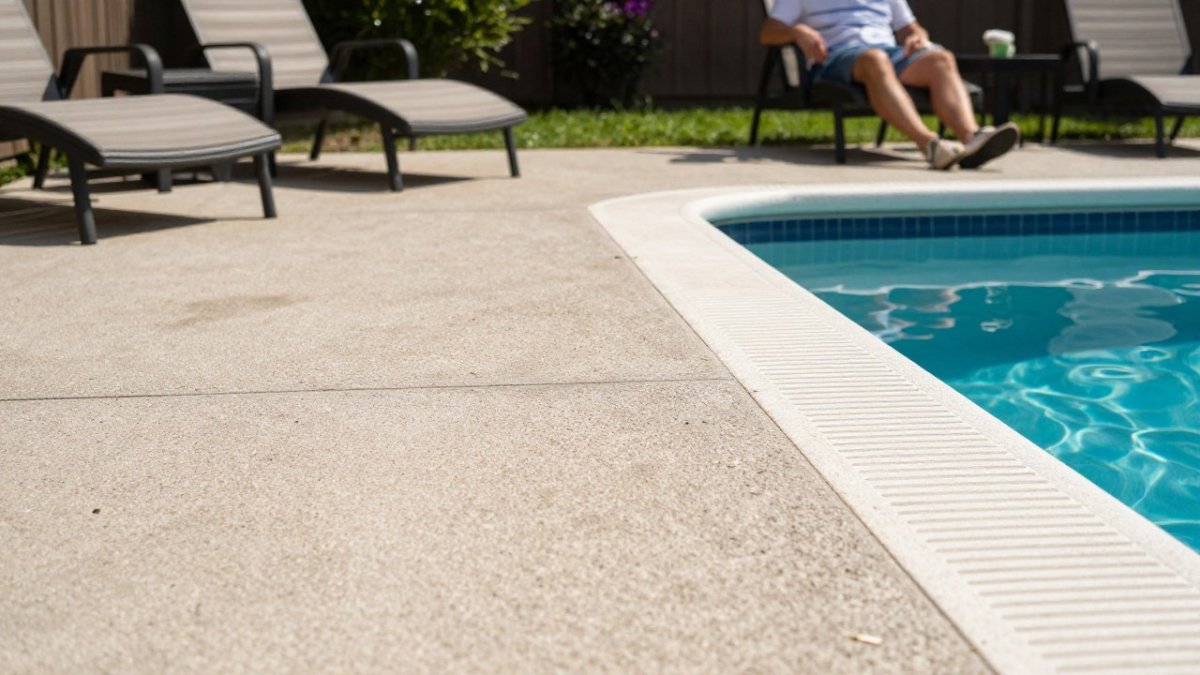
A slip-safe finish is only useful if it stays that way. Smooth glossy coatings may look attractive at first but can become hazardous when wet. Regular cleaning helps remove the film of algae and sunscreen that can reduce grip over time.
CTi of Acadiana, LLC applies its Hallmark System to pool decks, a finish described as easy to care for and slip safe. Homeowners can review completed pool deck work in the pool deck service options before choosing a finish, and see how different textures look in real settings on the garage floor project examples page, which shows similar coating work on other surfaces.
Comparing Flooring Alternatives Side by Side
The table below summarizes the main options homeowners consider for outdoor concrete. Use it to narrow your list, then ask for a site visit to confirm what suits your slab.
| Option | Best For | Slip Resistance | Upkeep | Typical Lifespan |
|---|---|---|---|---|
| Stained concrete | Patios with sun exposure | Moderate; add texture | Seal every few years | Long, with resealing |
| Decorative overlay | Visual upgrades on sound slabs | Varies by texture | Periodic recoating | Depends on base and sealing |
| Textured pool deck coating | Wet areas near the pool | High when textured | Routine cleaning | Depends on traffic and sun |
| Stamped finish | Stone or brick appearance | Moderate | Reseal as needed | Depends on base and sealing |
Lifespans depend heavily on the condition of the slab, the climate exposure and how the surface is maintained, so treat these as general guidance rather than guarantees.
What Extraordinary Flooring Alternatives for Homeowners Cost
Pricing depends on the size of the area, the condition of the slab, the finish selected, and any repairs needed beforehand. Pricing depends on the size of the area, the condition of the slab, and the finish selected. For a quote, contact CTi of Acadiana, LLC directly. What you can do is separate the estimate into its real cost drivers so you can compare bids on equal terms.
Most exterior concrete projects break into four line items:
- Surface preparation and repair. Crack filling, grinding, pressure washing, oil and sealer removal, and drainage corrections. This is the line item that most often separates a low bid from a realistic one.
- The finish itself. Stained concrete, a decorative overlay, a stamped texture, or a textured pool deck coating each carry different material and labor costs per square foot.
- Add-ons. Borders, saw-cut patterns, slip-resistant texture, and additional sealer coats.
- Sealing and cure time. Some finishes require a topcoat and a cure window before the surface can take foot traffic.
A practical budgeting rule is to expect preparation and repair to be the swing factor. A sound, clean slab keeps the finish cost predictable; a cracked, oil-stained, or poorly draining slab can push the total well above a finish-only quote. Be cautious with very low online quotes that do not itemize preparation or sealing, because those steps are where early failures originate.
For a figure that reflects your actual project, request an estimate that lists scope, materials, and labor separately. A written estimate lets you compare options on equal terms, which is more useful than comparing a bare price against one that includes preparation. If you want to plan a budget before the site visit, review the patio coating cost guide first, then bring your questions to the free on-site estimate.
Environmental Impact, Subfloor Needs and Resale Value
Most articles on flooring alternatives stop at aesthetics. Three factors that actually decide whether an alternative performs and pays back are environmental profile, subfloor compatibility, and resale effect. Each deserves its own look.
Environmental impact and indoor air quality. Environmental performance varies across flooring materials, and no single score captures it. For exterior concrete finishes, the practical questions are different: how long the finish lasts before recoating, whether the sealer or coating off-gasses after application, and how much material and waste the job generates. Ask for the product’s safety data sheet and confirm the cure and ventilation window before the surface is used.
Subfloor compatibility. This is the most overlooked factor and the one most likely to cause an early failure. A coating or overlay needs a stable, dry base. Moisture coming up through the slab can cause blistering, and movement in a cracked slab will telegraph through any thin finish. Before choosing a product, confirm three things: slab moisture (a moisture test, not a visual check), crack and joint condition, and slope and drainage. Different finishes tolerate different conditions, a penetrating stain is more forgiving of minor surface variation than a thin film coating, and a stamped overlay depends more heavily on a sound base and careful sealing. If the slab fails any of these checks, repair comes before finish selection, not after.
Resale value. Resale value is harder to quantify than cost, and any claim about a specific dollar return should be treated with caution. A clean, well-maintained patio or pool deck generally makes a stronger first impression during a showing than a cracked or faded one.
Booking Your Free On-Site Estimate
The most reliable way to choose a finish is to have the surface assessed in person. CTi of Acadiana, LLC offers free custom estimates that include an on-site visual inspection and detailed measurements. A comprehensive written estimate is provided by the end of the business day.
Bring your questions about slip safety, shade and moisture, upkeep and timing. The estimator can explain which options suit your slab and what preparation each one requires. If you are ready to move forward, you can schedule your free estimate directly, or review the low-maintenance patio flooring options for 2026 guide first, along with the patio coating cost guide to plan your budget.
Concrete patios and pool decks do not have to stay worn or unsafe. With the right finish and proper preparation, a tired surface can look refreshed. Schedule your free estimate with CTi of Acadiana, LLC to see which option fits your space.
Frequently Asked Questions
What are low-maintenance flooring options for a patio?
Low-maintenance patio options include concrete coatings, pavers, and stamped or textured concrete with a sealed finish. Pricing depends on square footage, surface condition, and the finish selected, so contact CTi of Acadiana, LLC for a written estimate based on your specific patio.
Which patio flooring options are slip-resistant when wet?
Slip resistance depends on the texture and finish of the surface, not only the material. Broom-finished or textured concrete coatings, and surfaces with added grit, generally offer better traction than smooth polished finishes, especially in Acadiana’s humid, frequently wet conditions. Ask any contractor how the finish was textured and whether it was tested for slip resistance on wet surfaces before you commit.
How do concrete coatings compare with pavers for outdoor spaces?
Concrete coatings are typically applied over an existing slab, which can make them a practical choice for worn or cracked patios and pool decks. Pavers are installed as individual units on a prepared base and can be repaired section by section. The better choice depends on the condition of your existing slab and how much disruption you can accept during the project.
What are alternatives to plain concrete for a pool deck?
Each option has different installation requirements, so the existing slab’s condition and drainage should be evaluated first. A detailed on-site inspection can identify which finish suits your deck.

No responses yet