

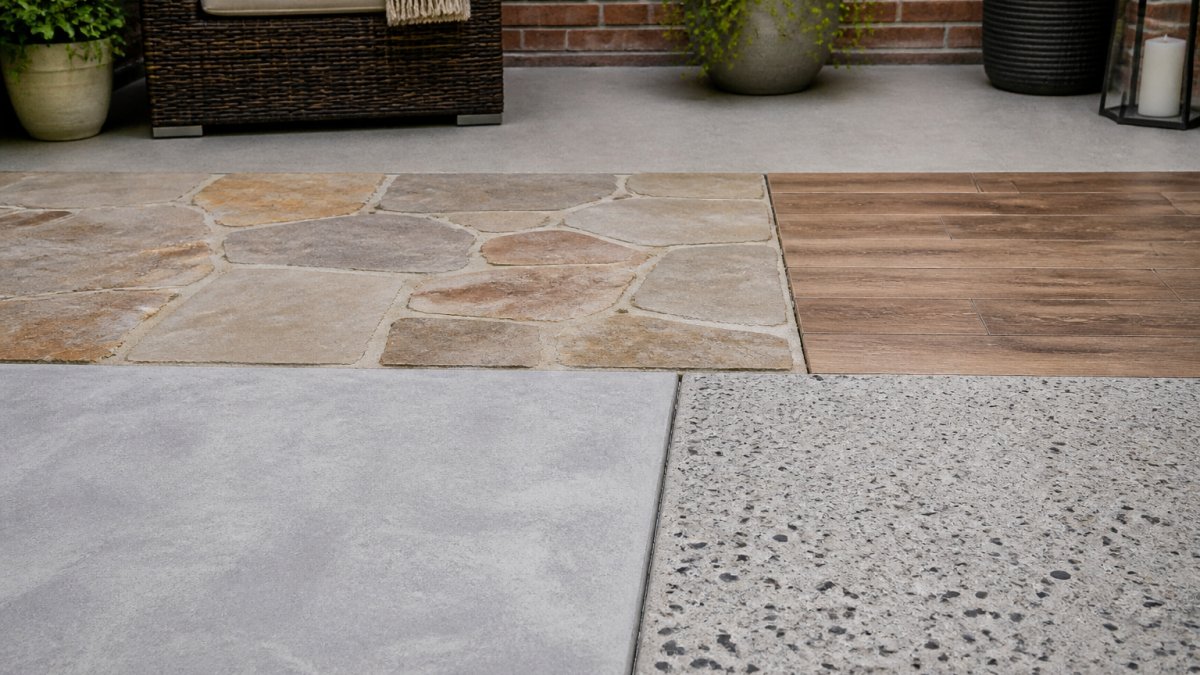
Last Updated: October 23, 2026
Quick Summary
Low maintenance patio flooring solves the problem of constant upkeep by matching durable materials to your budget, climate, and actual needs. Top options include concrete coatings, porcelain tiles, interlocking pavers, and stamped overlays, each requiring minimal routine care like sweeping and occasional rinsing.
- Concrete provides a stable, cost-effective foundation for patio flooring over concrete without demolition.
- Porcelain tiles and quality epoxy coatings resist staining, UV fading, and freeze-thaw damage with only sweeping and occasional mopping needed.
- Plastic interlocking tiles are the most affordable entry point and require no sealing, though they fade faster in direct sun without UV stabilization.
- Pool decks require slip-resistant surfaces like textured coatings, rubber pavers, or porcelain to prioritize safety over aesthetics.
- Lifecycle cost matters more than sticker price; a cheaper material needing replacement in three to five years costs more over a decade than mid-range options lasting longer.
Table of Contents
- Why Low Maintenance Patio Flooring Matters
- Patio Flooring Over Concrete: Your Best Starting Point
- Concrete Patio Coating Systems for Durability and Style
- Slip-Resistant Pool Deck Flooring Options
- Budget-Friendly Low Maintenance Patio Flooring Solutions
- Patio Flooring Cost: What to Expect and How to Plan
- Maintenance Requirements and Climate Suitability
- Conclusion
- Frequently Asked Questions
Why Low Maintenance Patio Flooring Matters
Your patio is often the first impression visitors get of your home. The real challenge isn’t finding attractive options, it’s finding ones that won’t demand constant upkeep in our climate.
Low maintenance patio flooring solves a genuine problem. Many homeowners invest in patio improvements only to spend years fighting mold, stains, and deterioration. The right material gives you a space that looks great without becoming a weekend project.
At CTi of Acadiana, LLC, we’ve seen the wrong flooring choice create frustration: homeowners spend money upfront, then discover their patio needs sealing every season or begins peeling within a few years.
The key is matching the material to your actual needs: budget, climate, and how much time you’re willing to spend on maintenance.
Patio Flooring Over Concrete: Your Best Starting Point
If you already have concrete, you’re in luck. It’s the most cost-effective foundation for low maintenance patio flooring, and you can build directly on top instead of demolishing and removing.
Patio flooring over concrete works because concrete provides a stable base, so you add a protective, attractive layer on top instead of tearing out and replacing the entire surface.
The best options for concrete patios fall into a few categories. Overlay systems coat the existing surface and cure into a durable finish. Interlocking tiles sit on top without adhesive, making them removable. Permeable pavers allow water drainage while adding texture and visual interest.
Each approach has different maintenance demands: some require periodic sealing, others only occasional cleaning. Understanding these differences helps you avoid costly mistakes.
Before choosing any patio flooring over concrete option, have the concrete inspected for major cracks or structural issues. Small hairline cracks are fine, but large cracks or spalling concrete may need repair first. A professional can assess whether your concrete is stable enough for overlay systems.
Concrete Patio Coating Systems for Durability and Style
A concrete patio coating transforms dull gray concrete into a finished surface with real visual appeal, bonding directly to the concrete and curing into a protective layer that handles foot traffic and weather.
Coating systems offer flexibility in appearance: solid colors, decorative patterns, or finishes that mimic natural stone, with a seamless look and no grout lines or gaps.
The durability of concrete patio coating systems depends on the product and application. Quality systems resist staining, UV fading, and moisture intrusion. The Outdoor Flooring Trends analysis highlights epoxy and polyurethane coatings as leading choices for low-maintenance outdoor spaces.
What makes these systems work is proper surface preparation: the concrete must be clean, dry, and free of loose material. Many DIY attempts fail here, and rushing prep leads to premature failure.
One honest limitation: coating systems can eventually show wear in high-traffic areas and may need touch-up or recoating after many years. For most homeowners, that’s a small price for years of maintenance-free use.
Never apply a coating system to wet concrete or during rain. Moisture prevents proper curing and causes adhesion failure. Wait at least 48 hours after rain before applying, and check the weather forecast to ensure dry conditions during and after application.
Slip-Resistant Pool Deck Flooring Options
Pool decks demand special attention. The surface is constantly wet, exposed to chlorine, and used by barefoot swimmers. Slip resistance isn’t optional, it’s a safety requirement.
Slip-resistant pool deck flooring options balance safety with durability. Explore specialized pool deck flooring solutions to find the right choice for your swimming area. Textured coatings add grip without feeling rough underfoot.
The MyStoneFloor patio trends guide identifies porcelain paving as a nearly stain-resistant, low-upkeep option suitable for pool environments. Porcelain can be jet washed clean and resists the damage that chlorine and moisture inflict on softer materials.
Rubber tiles and pavers are another strong pool deck option: excellent slip resistance, cushioning underfoot, natural drainage, and no water absorption or easy staining.
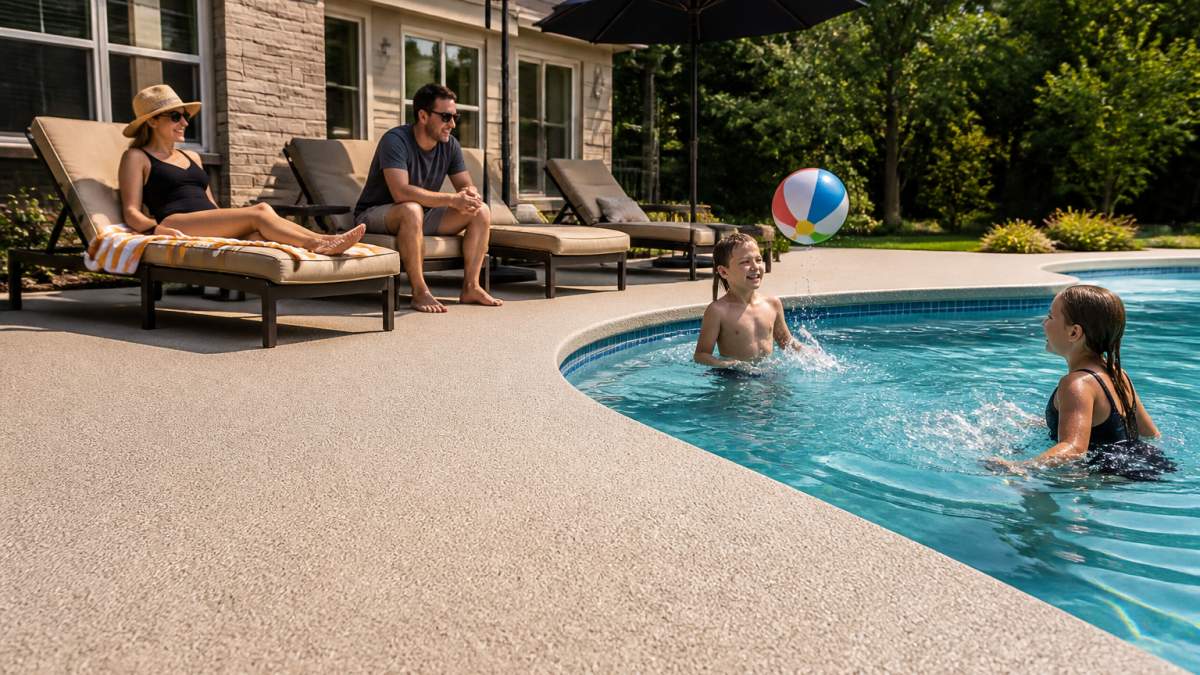
Temperature is a practical consideration. Darker surfaces absorb heat and become uncomfortable on bare feet in summer, while light colors stay cooler. A pool deck that’s too hot to walk on defeats the purpose of having a beautiful space.
For pool decks, prioritize slip resistance above all else. A beautiful deck that causes someone to slip is a liability and a tragedy waiting to happen. Test any option by walking on it when wet before committing.
Budget-Friendly Low Maintenance Patio Flooring Solutions
Not every solution requires a large investment. Budget-friendly options still deliver durability and low maintenance, but the trade-offs are specific and worth understanding before you buy.
Plastic interlocking tiles are the most affordable entry point. These lightweight pavers snap together without adhesive or grout, so a typical patio can be installed in a weekend with no specialty tools.
Outdoor carpet tiles are another low-cost route. Modern outdoor carpet is typically solution-dyed polypropylene, which resists mold and mildew and holds color better than older olefin carpets.
Rubber tiles and pavers sit in the same budget band. They are slip-resistant, cushioning, and drain well when installed with gaps.
Stamped concrete overlays fall into the mid-range budget category. They are more affordable than full replacement but more expensive than interlocking tiles, and the result mimics natural stone patterns.
Artificial turf is a budget-friendly visual fix for small patios and dog runs.
A realistic way to compare these options is lifecycle cost, not sticker price. A cheap plastic tile that needs replacing in three to five years can cost more over a decade than a mid-range option that lasts longer.
Budget-conscious homeowners with smaller patio areas who prioritize getting started quickly over maximum longevity. Interlocking tiles work especially well for renters or those who may move within a few years, while stamped overlays suit homeowners who plan to stay and want a permanent look.
Patio Flooring Cost: What to Expect and How to Plan
Understanding patio flooring cost helps you make decisions aligned with your budget and timeline. Costs vary dramatically based on material, size, and whether you hire professionals or tackle installation yourself.
The most affordable options start under certain price points for basic materials. Professional installation adds significant cost but ensures proper application and warranty coverage, often paying for itself through better durability and fewer problems down the road.
Cost isn’t just the initial purchase and installation. Factor in maintenance over time: a cheaper material that requires frequent sealing or replacement may cost more over ten years than a higher-priced option that needs minimal upkeep.
Rather than quoting a price over the phone, CTi of Acadiana, LLC conducts an on-site inspection and provides a comprehensive written estimate by end of business, so you see exactly what you’re paying for before committing. Schedule your free estimate to understand actual costs for your patio project.
A detailed estimate also includes a realistic timeline, specific materials, and clear scope of work, protecting you from contractors changing prices mid-project.
Be cautious of estimates provided over the phone or via text without seeing your property. Actual conditions, existing surface condition, drainage issues, site access, all affect cost. A professional estimate requires an in-person assessment.
Maintenance Requirements and Climate Suitability
“Low maintenance” means different things for different materials.
Porcelain and engineered tiles. Routine care is sweeping and occasional mopping or rinsing.
Concrete coatings (epoxy and polyurethane). Routine care is sweeping and damp mopping.
Stamped overlays and resurfacing systems. These need periodic resealing, typically every few years depending on traffic and exposure, to maintain appearance and freeze-thaw protection.
Natural stone (including limestone and terracotta). These demand the most upkeep of the group.
Pavers and permeable systems. Routine care is sweeping and occasional rinsing. Polymeric sand in the joints needs replenishing over time, and weeds can establish in open joints.
Rubber tiles and pavers. Routine care is rinsing and occasional sweeping. They do not absorb water or stain easily and drain well when installed with gaps.
Plastic interlocking tiles. No sealing required; rinse or sweep as needed.
Artificial turf. Rinse and brush occasionally; remove leaves and debris so drainage does not clog. It gets hot in direct sun and has a finite lifespan before backing and fibers degrade.
Drainage and climate matching deserve more attention than most guides give them.
A practical way to judge any option is to ask four questions: What is the routine cleaning routine? Does it need sealing or staining, and how often? How does it handle freeze-thaw and standing water? And can damaged sections be replaced individually? The answers separate genuinely low-maintenance surfaces from ones that simply look good on day one.
Low maintenance is not the same as no maintenance. Porcelain, quality coatings, and interlocking tiles demand the least routine work; natural stone and unsealed porous materials demand the most. Match the material to your climate and drainage first, then to your willingness to seal, clean, and repair.
Different patio materials demand different levels of upkeep and perform differently across climates.
| Material | Routine Care | Sealing Required | Best Climate Match |
|---|---|---|---|
| Porcelain and engineered tiles | Sweeping and occasional mopping | No | Freeze-thaw cycles |
| Concrete coatings (epoxy and polyurethane) | Sweeping and damp mopping | No | Most climates |
| Stamped overlays and resurfacing | Sweeping and rinsing | Yes, every few years | Moderate exposure |
| Natural stone (limestone, terracotta) | Regular cleaning and maintenance | Yes, recommended | Mild, dry climates |
| Pavers and permeable systems | Sweeping and occasional rinsing | No | Areas with drainage needs |
| Rubber tiles and pavers | Rinsing and occasional sweeping | No | Pool decks and play areas |
| Plastic interlocking tiles | Rinse or sweep as needed | No | Moderate climates |
| Artificial turf | Rinsing and occasional brushing | No | Covered or shaded areas |
Conclusion
Choosing the right low maintenance patio flooring means balancing appearance, durability, and your willingness to maintain the surface over time. The best material depends on your budget, climate exposure, and how you’ll use the space.
CTi of Acadiana, LLC specializes in helping homeowners navigate this decision. Contact the business to discuss your specific patio flooring needs. Their Hallmark System combines durability with easy maintenance and slip-safe performance. Rather than guessing at what will work, schedule a free estimate. You’ll get an on-site visual inspection, detailed measurements, and a comprehensive written estimate by end of business. No surprises, no phone quotes that change when the contractor arrives.
Frequently Asked Questions
What type of patio flooring lasts the longest?
Porcelain tiles and professionally applied concrete coatings rank among the most durable low maintenance patio flooring options, often lasting 15-20 years or more with minimal upkeep. Porcelain resists staining and can be jet washed, while quality concrete coatings provide weather-resistant protection. Natural stone and terracotta require regular sealing and maintenance, making them less durable long-term without consistent care.
Can you install patio flooring over an existing concrete slab?
Yes. Concrete patio coating systems are designed to bond directly to existing concrete, making them an ideal solution for transforming worn or cracked surfaces. Interlocking tiles, rubber pavers, and artificial turf can also be installed over concrete with proper surface preparation. A professional inspection ensures your concrete slab is suitable for the chosen flooring type and identifies any drainage or structural issues before installation.
What is the most budget-friendly low-maintenance patio flooring?
Interlocking plastic or PVC tiles and outdoor rubber pavers offer the lowest upfront costs for low maintenance patio flooring. Artificial turf is also affordable and requires no sealing or staining. Concrete coatings fall in the mid-range and provide excellent long-term value because they reduce future maintenance costs. Porcelain tiles cost more initially but deliver lower lifecycle costs due to their durability and minimal upkeep needs.
Which patio flooring options are slip-resistant around a pool?
Textured concrete coatings, rubber pavers, and specialized slip-resistant pool deck flooring are designed for wet environments. Porcelain tiles with textured surfaces also offer slip resistance. Avoid glossy finishes on any material near water. Professional slip-resistant pool deck flooring systems include grip-enhancing additives that remain effective even when wet, making them the safest choice for high-traffic pool areas.

No responses yet