

Quick Summary
Professional concrete resurfacing is usually worth it when the slab is structurally sound and has only cosmetic problems like stains, scaling, or hairline cracks. It typically costs 30% to 50% less than replacement, but it fails if the base is moving, settling, or holding water.
- Resurfacing is generally 30% to 50% less expensive than tearing out and pouring new concrete.
- Hairline cracks that stay closed are usually cosmetic and can be filled before an overlay.
- Cracks that widen, offset, or reappear after patching signal movement an overlay cannot fix.
- Resurfacing is reported to last 5 to 25 years depending on product, preparation, and maintenance.
- Professional basic overlays commonly run from $1,000 to $5,000, excluding larger or complex jobs.
Table of Contents
- What Concrete Resurfacing Is and How an Overlay Works
- When Concrete Resurfacing Makes Sense and When It Doesn’t
- Concrete Resurfacing Cost: What Drives the Price
- Concrete Resurfacing vs Replacement: A Like-for-Like Lifecycle Comparison
- Lifespan, Warning Signs, and What Shortens Results
- What Concrete Resurfacing Looks Like Before and After
- How to Resurface a Concrete Driveway, and How to Evaluate Proposals
- Booking Your Free Estimate to Decide If Resurfacing Fits Your Slab
- Frequently Asked Questions
What Concrete Resurfacing Is and How an Overlay Works
Last Updated: November 7, 2026
Is professional concrete resurfacing worth it? For many worn but structurally sound slabs, yes, and it often costs less than replacing the slab.
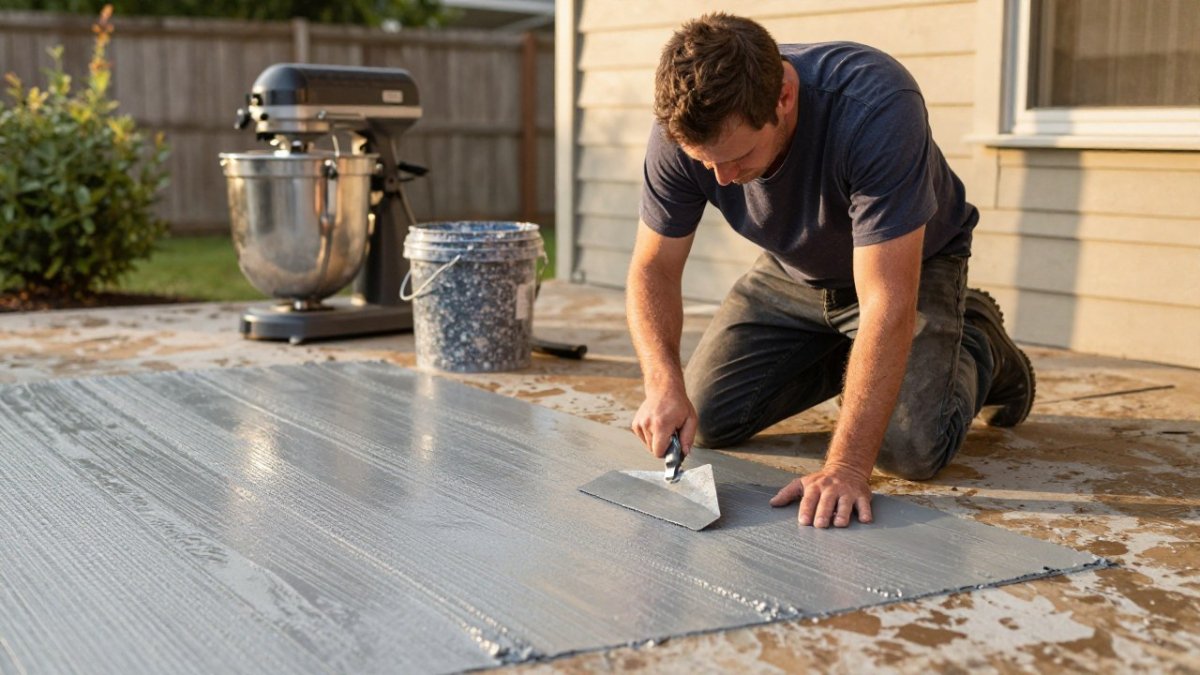
A concrete overlay is a thin layer of resurfacer, typically applied in a few millimeters to a fraction of an inch, that bonds to the existing slab.
Resurfacing is generally 30% to 50% less expensive than tearing out and pouring new concrete, according to Zion Outdoors concrete resurfacing cost guidance.
When Concrete Resurfacing Makes Sense and When It Doesn’t
Resurfacing works best on slabs with cosmetic problems: faded color, surface scaling, small hairline cracks, and stains. It fails when the slab itself is failing. An overlay is a thin bonded layer, so it can only perform as well as the slab beneath it.
A failed flooring system may be a good candidate for resurfacing, but a failed concrete slab often needs replacement. Resurfacing also is not a fix for poor drainage or heaving soil.
A Practical Slab-Condition Checklist
Before you request quotes, walk the slab and score it against the items below. The goal is to separate cosmetic wear from structural movement, drainage problems, or a failing base, the three conditions that most often turn a resurfacing project into a callback.
- Cracks are hairline and do not widen or offset across the joint
- No section is sinking, heaving, or pulling away from the house or edging
- Surface damage is limited to scaling, staining, or light wear
- Water drains off the surface rather than pooling
- The slab is at least several years old and has no active structural movement
If you can check most of these boxes, resurfacing is a strong candidate. If you cannot, get a professional inspection before spending money on a finish.
How to Read the Checklist Like an Inspector
A checklist only helps if you know what each item is actually testing. Use the notes below to interpret what you see.
- Crack width and offset. Hairline cracks that stay closed are usually cosmetic and can be filled before an overlay. Cracks that are wider than a credit card, that step up or down across the joint, or that reappear after patching point to movement in the slab or the base. An overlay cannot restrain that movement, and the crack will reflect through the new surface.
- Vertical displacement. Stand at one end of the slab and sight along the surface. A slab that rises or drops relative to its neighbor, or that has pulled away from the house, garage, or edging, is showing base movement. Resurfacing over it hides the symptom without fixing the cause.
- Spalling depth. Shallow scaling and flaking can be prepared and coated. Deep spalling that exposes aggregate or leaves soft, crumbly concrete means the top layer has lost integrity, and the overlay has nothing sound to bond to.
- Drainage and ponding. After a rain, note where water stands. A slab that ponds holds moisture against the overlay, shortens its life, and signals that the grade or slope needs correction before any finish is applied.
- Age and history. A slab that has been patched repeatedly, coated before, or poured over unstable fill carries more risk. Ask when it was poured and whether any prior coating or repair was done.
Watch out: a slab can pass a visual walk-through and still have a hollow-sounding area or a soft base that only shows up during preparation, so treat the checklist as a screening tool rather than a guarantee.
When to Walk Away From Resurfacing
Some conditions should push you toward repair or replacement rather than an overlay:
- Active movement, such as cracks that widen seasonally or slabs that continue to settle
- Standing water or a grade that slopes toward the house or garage
- Widespread spalling or a surface that crumbles under foot traffic
- Repeated patching that has not held
- A slab that is already near the end of its service life
In those cases, an honest contractor should tell you that resurfacing is not the right spend. A short inspection now is cheaper than paying twice.
Concrete Resurfacing Cost: What Drives the Price
Professional concrete resurfacing for a basic overlay commonly runs from $1,000 to $5,000, according to Angi concrete resurfacing cost estimates. Do-it-yourself materials cost $3 to $9 per square foot, based on McKinnon Materials DIY overlay cost estimate, but materials are only part of the job.
Several factors move the price:
- Slab size and access: Larger areas lower the per-square-foot rate but raise total cost.
- Condition and preparation: Repairing cracks or removing old coatings adds labor.
- Finish type: Stamped, textured, and multi-color finishes cost more than a solid color.
- Sealer and maintenance products: Better sealers extend life and add to the upfront cost.
Pricing depends on the size, condition, and finish of your slab. Visit our website to request a custom estimate for your project.
Concrete Resurfacing vs Replacement: A Like-for-Like Lifecycle Comparison
Compare the options over the same period, not just the day-one invoice. A resurfacing job that lasts 10 years and a replacement that lasts 30 are not equal, but the cost per year can still favor resurfacing.
Resurfacing is reported to last 5 to 25 years, depending on product, surface preparation, application technique, and maintenance, according to Madison Coatings Company lifespan guidance. Replacement outlasts that range, but it costs more and requires a longer disruption.
What to Include in Each Column
A like-for-like comparison uses the same categories for every option. Build a simple table with these rows:
- Upfront cost. The quoted price for the work, including preparation and materials.
- Preparation and repair. Crack filling, coating removal, grinding, or base correction needed before the finish goes down.
- Disruption. How long the surface is unusable, and whether vehicles or foot traffic must be rerouted.
- Routine maintenance. Resealing, cleaning, and minor patching over the service period.
- Likely repeat work. The probability that the surface will need another overlay, repair, or replacement within your ownership window.
- Expected service life. A realistic range, not the best-case number from a product sheet.
A Worked Example Using Round Numbers
Use your own quotes, but the structure below shows how the math works. Use your own quotes to run the math. In general, replacement can win on cost per year over a long ownership period, while resurfacing wins on upfront cash and disruption. That trade-off is the real decision. If you plan to stay in the home for decades, replacement can be the better long-run value.
Factors That Shorten Resurfacing Life
Your service-life estimate should reflect the conditions the slab will actually face:
- Climate and freeze-thaw exposure. Repeated freezing and thawing stresses the bond between overlay and slab.
- De-icing salts. Salt exposure accelerates surface deterioration and shortens coating life.
- Traffic type. A driveway that carries heavy vehicles wears faster than a patio.
- Shade and moisture. Constant damp shade slows curing and promotes wear.
- Installation quality. Surface preparation and product selection matter as much as the material itself.
Watch out: a quote that looks cheaper per square foot can lose on cost per year once resealing, repairs, and a shorter service life are included, so always compare the full lifecycle, not the invoice.
Questions to Ask Before You Commit
- What service life are you willing to put in writing for this slab and this product?
- What maintenance will the finish need, and how often?
- What does the warranty cover, and what voids it?
- What is the plan if the overlay fails early?
A contractor who can answer these with specifics is giving you the information you need to compare resurfacing and replacement honestly.
Lifespan, Warning Signs, and What Shortens Results
Results shorten when the surface is not prepared properly, when the wrong product is used for the traffic, or when the coating is exposed to heavy de-icing salts, freeze-thaw cycles, or constant wet shade.
Watch for these warning signs after installation: lifting edges, blistering, hollow spots that sound drummy when tapped, and cracks reflecting through the new surface. Learn why concrete coatings fail outdoors and how to prevent it. Catching them early keeps repairs small.
What Concrete Resurfacing Looks Like Before and After
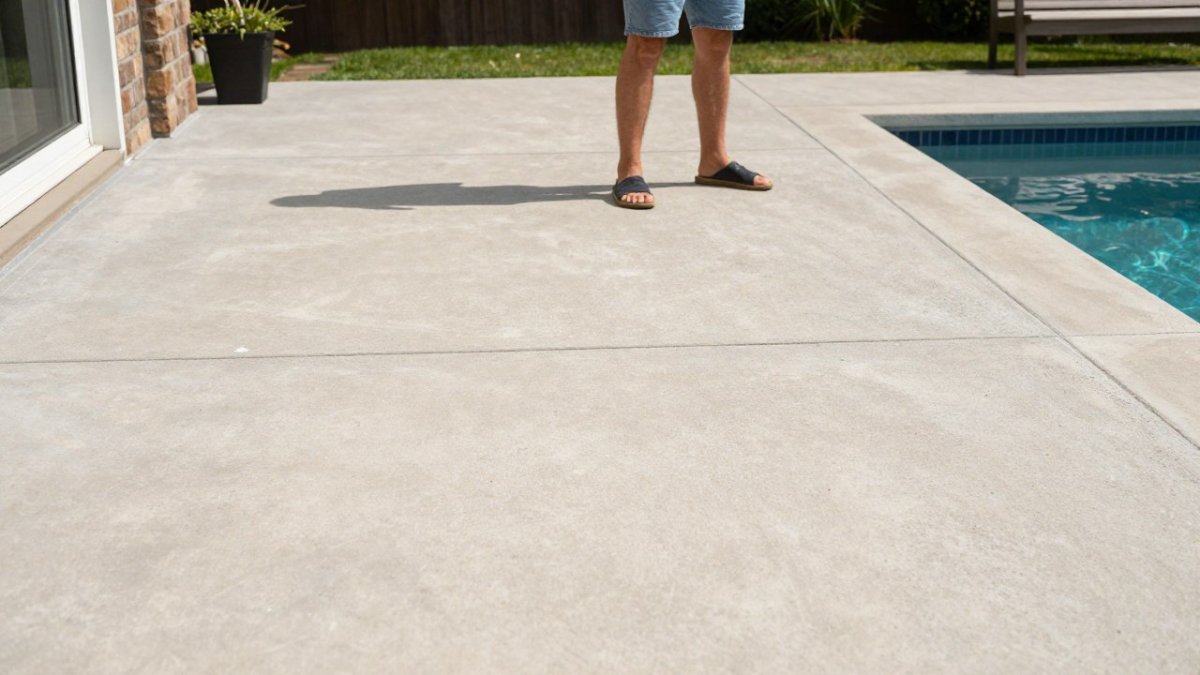
A well-executed resurfacing job can look uniform in color and texture, with the old stains and blotches hidden under the new finish. Cracks that were moving will still show through, so the before-and-after difference depends on the slab’s underlying condition. Look at finished work and ask the contractor to show comparable jobs before you decide.
How to Resurface a Concrete Driveway, and How to Evaluate Proposals
A typical driveway project starts with cleaning, followed by repairing cracks, profiling the surface, applying the overlay, and sealing. Curing takes time, and foot and vehicle traffic should wait until the material has set. See how long resurfacing takes to finish and use.
A detailed written estimate matters. Rough phone quotes often change on arrival, so ask for a price in writing before work begins. Confirm whether the warranty covers bond failure, cracking, and peeling, and what it does not cover.
The usual driveway project follows a fixed sequence, and a written scope helps you compare proposals.
| Step | What to do | Time or frequency |
|---|---|---|
| Cleaning | Clean the surface before any work | Start of project |
| Crack repair | Repair cracks in the slab | Before overlay |
| Surface profiling | Profile the surface so the layer can bond | Before overlay |
| Overlay | Apply the resurfacing layer | After preparation |
| Sealing | Seal the finished surface | After overlay |
| Curing | Keep foot and vehicle traffic off until set | Until material has set |
Booking Your Free Estimate to Decide If Resurfacing Fits Your Slab
Whether resurfacing is worth it comes down to your slab’s condition, your budget, and how long you plan to stay. If the concrete is sound, resurfacing usually delivers strong value. If it is failing, replacement may be the honest answer.
CTi of Acadiana, LLC offers free custom estimates, an on-site visual inspection with detailed measurements, and a comprehensive written estimate by the end of the business day. Follow these steps to request a free concrete coating estimate. You receive a price before the estimator leaves the property, and our Hallmark System is easy to care for and slip safe. Schedule Your Free Estimate to find out whether resurfacing fits your slab.
Frequently Asked Questions
Is professional concrete resurfacing worth the cost?
It is usually worth it when the existing slab is structurally sound and mainly has surface wear, staining, or minor cracks. Costs and lifespan vary with the size, condition, and finish of the slab, along with product, preparation, and maintenance. If the slab has structural cracking, heaving, or settling, replacement is often the better long-term value. A free on-site inspection can confirm which situation applies to your property.
Can cracked concrete be resurfaced, or does it need replacement?
Hairline and minor surface cracks can often be repaired and covered with an overlay. Structural cracks, displaced slabs, or areas with significant spalling usually need the underlying problem addressed first, and in severe cases the slab must be replaced. A slab-condition assessment during an on-site visit is the most reliable way to tell the difference, because a resurfacer can only bond to sound, properly prepared concrete.
How long does professionally resurfaced concrete last?
Concrete resurfacing lifespan depends on product choice, surface preparation, application technique, traffic load, weather exposure including freeze-thaw cycles and de-icing salts, and maintenance all affect how long the surface performs. Regular cleaning and timely repair of small damage tend to extend service life, while poor bonding or skipped preparation can shorten it considerably.
What is the difference between concrete resurfacing and an overlay?
In practice the terms are often used interchangeably. A concrete overlay is a thin cement-based or polymer-modified layer applied over an existing slab, and concrete resurfacing refers to the broader process of preparing the surface, repairing defects, and applying that overlay. Overlay thickness and product type determine the finish options, such as decorative textures, color, and slip resistance.

No responses yet