

Quick Summary
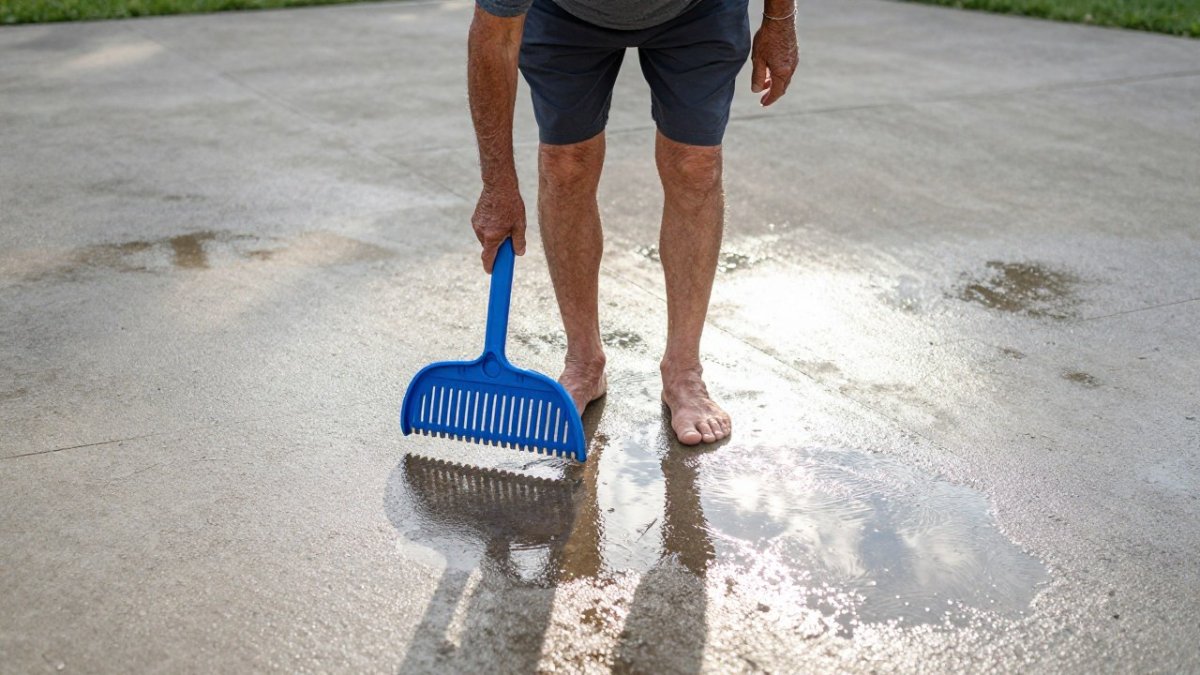
Concrete pool decks get slippery because water fills the tiny gaps in the surface and creates a thin film that lowers friction under your shoe. Slickness usually comes from a few causes, including smooth or polished finishes, glossy sealer buildup, algae, standing water, and surface wear. Identifying the specific cause, such as slippery concrete from sealer buildup, helps you choose the right fix.
- Concrete is slippery when wet because water fills its texture and lowers friction.
- Look under bright light for a mirror-like sheen, which signals sealer buildup.
- Puddles lasting 30 minutes or more after rain point to standing water or clogged drainage.
- Avoid over-pressure washing, which can etch concrete and leave it smoother.
- Treat algae before reapplying sealer, since sealer over growth can trap moisture.
Table of Contents
- Why Concrete Pool Decks Turn Slick When Wet
- Diagnosing the Cause: Sealer, Algae, Wear, or Standing Water
- How to Clean a Slippery Concrete Pool Deck Safely
- Pool Deck Algae Removal and Preventing Regrowth
- Choosing a Slip-Resistant Concrete Sealer for Pool Decks
- Fixing Concrete Pool Deck Drainage Problems
- Testing Traction and Knowing When to Call a Professional
- Scheduling Your Pool Deck Traction Check With CTi of Acadiana
- Frequently Asked Questions
Why Concrete Pool Decks Turn Slick When Wet
Last Updated: November 8, 2026
Concrete pool decks get slippery for a few common reasons, and most of them come down to water, surface finish and dirt, since slippery concrete usually traces back to one of these.
Concrete is slippery when wet because water fills the tiny gaps in its texture. A smooth, troweled finish gives you far less grip than a broomed or textured one.
Here are the most common culprits:
- Smooth or polished finishes that were never textured for wet use
- Sealers and coatings that build up a glossy, slick film
- Algae and mildew that grow in shaded or damp areas
- Standing water from poor slope or clogged drainage
- Worn surfaces where the top layer has polished down over time
- Dirt and residue from pool water, sunscreen and splash-out
The right fix depends on which cause you have. A slick deck caused by a glossy sealer needs a different approach than one covered in algae.
Diagnosing the Cause: Sealer, Algae, Wear, or Standing Water
Before you buy a cleaner, sealer, or additive, identify what is actually making the deck slick.
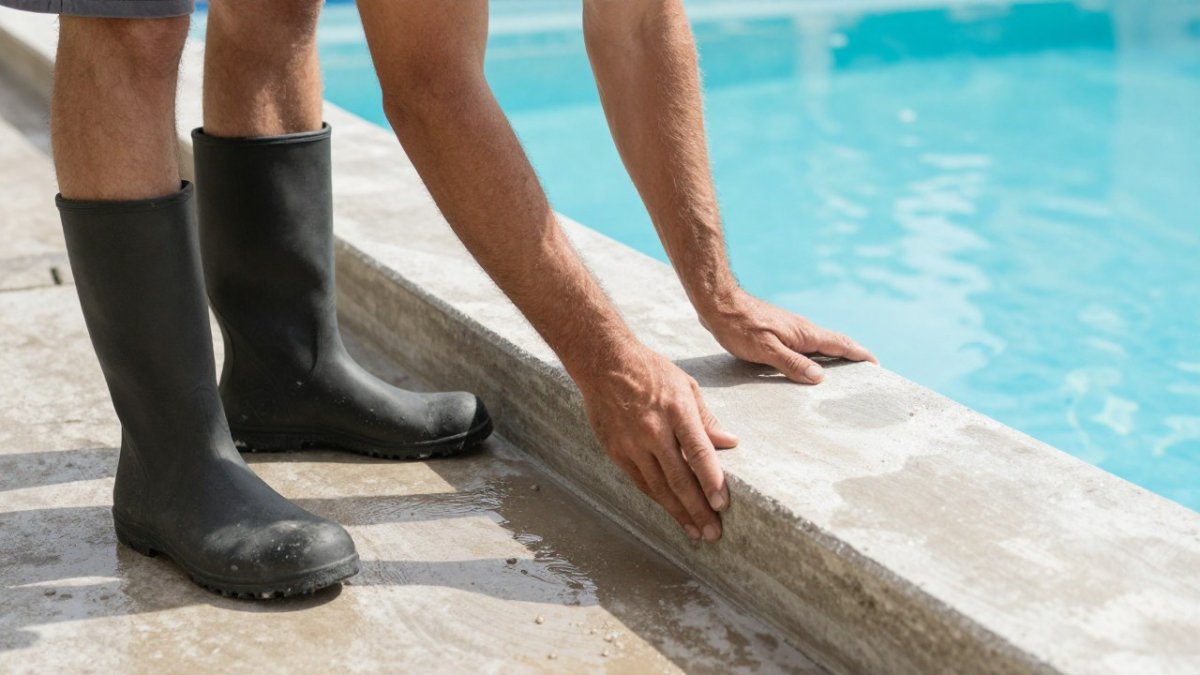
Step 1: Map where the slickness occurs. Walk the deck in rubber-soled shoes after it has been wet for at least 10 minutes. Note the exact spots where your foot slides. Slickness that follows main walking paths points to wear; slickness in shaded corners and near drains points to algae; slickness that appears only after rain in low spots points to standing water.
Step 3: Run the water bead test. Pour a cup of water on a dry section and watch how it behaves.
Step 4: Match the symptom to the cause.
- Glossy film, slickest in sun-exposed areas, water beads: Sealer or coating buildup. The film fills the texture and creates a smooth surface when wet.
- Green, black, or gray haze in shaded corners and near drains, smears on a cloth: Algae or mildew. The growth itself is slick, and it holds moisture against the concrete.
- Smooth, polished feel along walking paths, no film, water soaks in: Surface wear. Years of foot traffic and cleaning have worn down the broomed or textured finish.
- Puddles that stay 30 minutes or more after rain, slickness only in those spots: Standing water from poor slope, a low spot, or clogged drainage.
- White, chalky residue that feels slick when wet: Efflorescence or cleaner residue. Mineral salts or soap film can create a slippery layer until rinsed away.
Step 5: Check for combined causes. Many decks have two or three problems at once. A shaded deck might have algae in the corners, a glossy sealer on the main walkway, and a low spot where water collects. Work through the causes one at a time, starting with whatever is easiest to fix. Treat algae before you strip or reapply sealer, because sealer applied over growth can trap moisture and make the problem worse.
Watch out: Do not assume a slick deck needs a new sealer.
Each common cause of a slick deck has a telltale sign, so match what you see to the likely culprit before choosing a fix.
| Symptom | Likely cause | Check |
|---|---|---|
| Glossy film, water beads, slickest in sun | Sealer or coating buildup | Look under bright light for a mirror-like sheen |
| Green, black or gray haze, smears on a cloth | Algae or mildew | Rub with a white cloth in shaded corners and near drains |
| Smooth, polished feel on walking paths, water soaks in | Surface wear | Compare worn paths with unused areas |
| Puddles still there 30 minutes or more after rain | Standing water | Note low spots after a rain |
| White, chalky residue that feels slick when wet | Efflorescence or cleaner residue | Rinse and see whether the slickness goes away |
How to Clean a Slippery Concrete Pool Deck Safely
Cleaning is often the fastest way to improve traction, but it has to be done carefully. Harsh cleaners and high pressure can damage porous concrete and leave you with a bigger problem.
Follow these steps to clean the deck safely:
- Clear the area. Move furniture, toys and loose items off the deck.
- Rinse the surface. Wet the deck with a garden hose to loosen dirt and debris.
- Scrub with a stiff-bristle brush. Use a mild cleaner made for concrete, and work in small sections.
- Rinse thoroughly. Remove all cleaner so no residue is left behind.
- Let it dry completely. Check the surface before you walk on it again.
A common mistake is using too much pressure from a power washer, which can etch the surface and make it smoother.
Always wear rubber-soled shoes while you work. Work from the edges toward the pool, so you do not step on freshly cleaned areas.
Pool Deck Algae Removal and Preventing Regrowth
Algae is one of the most common reasons a pool deck feels slippery. It grows fastest in shade, along pool edges and in spots where water sits for long periods.
To remove algae:
- Brush the affected area with a stiff brush and a cleaner made for algae on concrete.
- Rinse well, then check the surface after it dries.
- Repeat the process if stains remain, but avoid over-scrubbing.
Preventing regrowth is where most homeowners see the real benefit. Try these habits:
- Trim nearby plants so they do not shade the deck and hold moisture.
- Fix drainage so water runs off instead of pooling.
- Rinse the deck regularly after heavy use or rain.
- Reapply cleaner or sealer on a schedule that fits your climate.
Algae returns fastest in humid, shaded areas. In warm, wet months, a regular rinse can help keep it under control.
Choosing a Slip-Resistant Concrete Sealer for Pool Decks
Sealers protect concrete, but the wrong one can make a deck slicker. To compare which concrete coatings offer the best slip resistance, see Which Concrete Coating Is Most Slip Resistant?.
Start with the finish, not the label. Most sealers fall into three finish categories, and each behaves differently when wet:
- Gloss or high-gloss sealers form a smooth, reflective film. They resist stains and UV damage well, but they are the slickest option when wet because the film fills the concrete’s texture. Reserve them for decorative areas away from water or for vertical surfaces.
- Satin sealers leave a soft sheen and moderate texture. They work for mixed-use decks where appearance matters but wet traction cannot be ignored.
- Matte or penetrating sealers leave a flat finish and preserve more of the concrete’s natural profile. They offer better wet traction than film-forming gloss products, but they may need more frequent reapplication because they wear away rather than build a coat.
Add anti-slip aggregate for wet areas. A sealer alone rarely provides enough traction for a pool deck. Anti-slip additives, typically fine polymer or silica particles, are mixed into the sealer or broadcast onto the wet coat before it dries. The two main types are:
- Mixed-in additives: Stirred directly into the sealer before application. They distribute evenly and are the simplest option for a uniform texture. Check the sealer manufacturer’s instructions for the correct ratio, because too much additive can cloud the finish or clog sprayers.
- Broadcast additives: Sprinkled onto the wet sealer coat and then sealed over. They create a more aggressive texture for steps, ramps, and high-traffic wet spots. Broadcast application takes more skill and can look uneven if not done carefully.
Check compatibility before you buy. Not every additive works with every sealer.
Apply in the right conditions. Sealer and additive performance depends on surface preparation and weather. Clean the deck thoroughly and let it dry completely before application.
Plan for reapplication. Anti-slip additives wear down with foot traffic, cleaning, and pool chemicals.
Watch out: Adding anti-slip aggregate to a gloss sealer will improve traction but will also dull the shine and may make the finish look uneven.
Fixing Concrete Pool Deck Drainage Problems
Water that sits on the deck is a slip hazard, and it can also weaken concrete over time. Fixing drainage often solves the problem for good.
Start by looking at the slope. Water should move away from the pool and the house. Stand on the deck after a rain and note where puddles form.
Options to consider:
- Regrade low areas so water runs toward a drain or grass.
- Clear clogged drains and gutters that send water onto the deck.
- Add a drainage channel along problem edges.
- Address downspouts that dump water near the pool.
Some drainage fixes are simple, like clearing debris or redirecting a downspout. Others, like regrading, may require professional help.
Testing Traction and Knowing When to Call a Professional
You can do a basic traction check at home. Use a wet, smooth shoe and walk across the deck at a normal pace. Notice where your foot feels unstable. Repeat the test on different surfaces and times of day.
Signs you should call a professional:
- Puddles stay on the deck long after rain
- The surface is cracked, flaking or worn down
- Cleaning does not improve traction
- You are not sure whether the cause is the sealer, the concrete or the drainage
- You want to resurface the deck or apply a new traction coating
A professional can measure slope, inspect the concrete and recommend a solution that fits your deck. This saves money because you avoid guessing.
Scheduling Your Pool Deck Traction Check With CTi of Acadiana
If your pool deck is slippery and you are not sure why, a professional traction check can give you clear answers.
The Hallmark System is easy to care for and slip safe.
To get started, schedule your free estimate and see how the team can help your deck. You can also see the pool deck services the business offers for pool areas.
Frequently Asked Questions
Why does a concrete pool deck get slippery when wet?
Wet concrete becomes slick because water fills the microscopic texture of the surface and forms a thin film between the sole of a shoe and the concrete. Smooth troweled finishes, glossy sealers, and surfaces with a thin layer of algae or dirt hold less friction than broom-finished or textured concrete. Standing water in low spots makes the problem worse, because it stays on the deck long after splash-out has stopped. Checking whether the deck is slick only when wet, or also when dry, helps narrow down the cause.
Can algae or mildew make a concrete pool deck slippery?
Yes. A thin biological film of algae, mildew, or biofilm can make even textured concrete feel slick, especially in shaded areas and in humid climates like south Louisiana. The film often looks like a faint green, gray, or brown stain. Cleaning it off usually restores traction noticeably. If the deck is slick only in shaded spots that stay damp, algae is a likely cause, and pool deck algae removal combined with better drainage is the usual fix.
Can a concrete sealer make a pool deck too slippery?
It can. Glossy or wet-look sealers reduce friction because they produce a smooth, film-forming surface. Matte sealers and sealers formulated with a slip-resistant additive usually provide better traction. When choosing a product for a pool deck, look for a slip-resistance rating or manufacturer data on wet traction, and confirm the product is rated for wet, chlorinated, and high-foot-traffic areas. Ask the product manufacturer how the sealer performs on wet surfaces before applying it.
What is the best way to clean a slippery concrete pool deck?
Start by removing loose debris and rinsing the deck with clean water. Use a mild concrete-safe cleaner or a dilute solution suited to the surface, scrub with a stiff brush, and rinse thoroughly so no residue remains. Avoid harsh acids or high-pressure settings that can etch the surface or damage sealer. Repeat cleaning on a regular schedule, and reapply an anti-slip additive or sealer when traction does not return after cleaning. Pricing for cleaning and resurfacing depends on the size of the deck, its condition, and the scope of work, so contact CTi of Acadiana, LLC for a current quote.

No responses yet