

Last Updated: November 5, 2026
Quick Summary
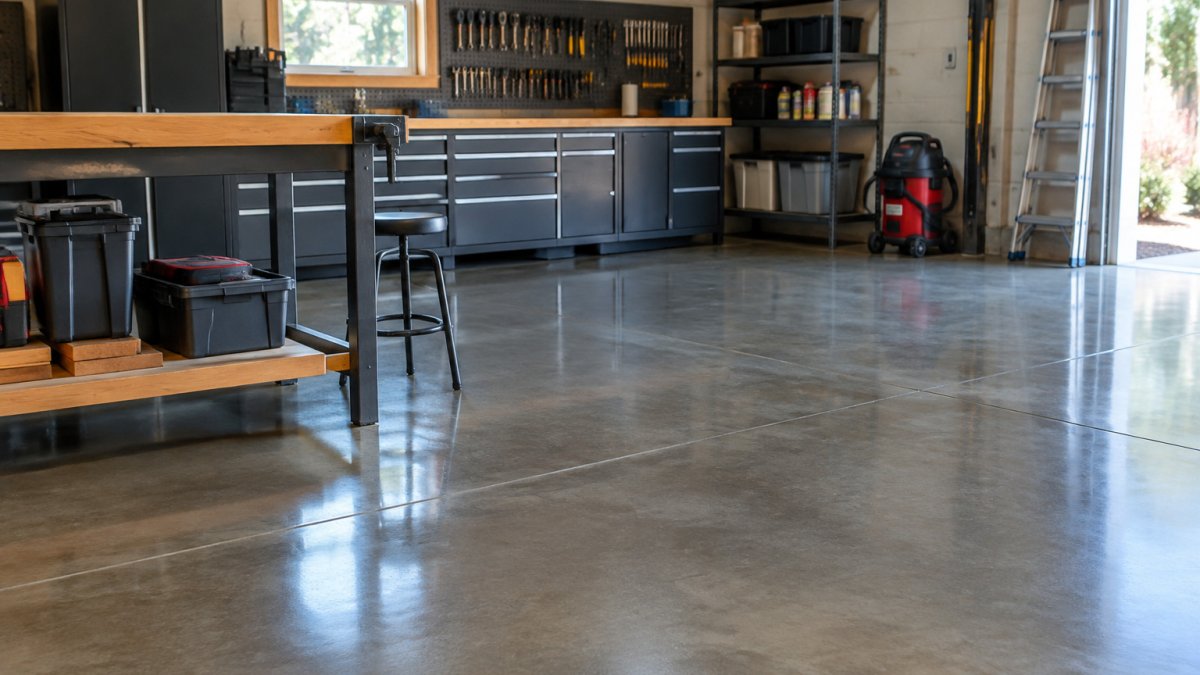
Choose a concrete finish for your garage workshop by matching it to your worst hazard: sealed or coated floors for woodworking, bare or densified polished concrete for welding sparks, and epoxy or polyaspartic for chemicals and solvents. Always test the slab for moisture, oil, and weak surfaces first, since poor preparation is the number one reason coatings fail.
- Rank your workshop’s main jobs, then pick the finish that protects against the worst of them.
- A high-gloss finish shows every scratch from dragged lumber, so pick matte or flake.
- Hot sparks and slag can scorch a painted or thin-coated floor, so keep a fire-safe welding zone.
- Most coating failures trace back to preparation, not the product, so test a small area first.
- A concrete sealer suits a sound slab with light demands but will not stop hot sparks or jack point loads.
Table of Contents
- Start With How You Actually Use the Garage Workshop
- Match the Finish to Workshop Activities and Priorities
- Check the Slab Before You Pick a Coating
- Epoxy and Polyaspartic Garage Floor Coating Compared
- When a Concrete Sealer for Garage Floors Is Enough
- Using Concrete Stain for Garage Floors and Decorative Finishes
- DIY Concrete Floor Finishes vs Professional Installation
- Slip Resistance, Repairs, and Maintenance Over Time
- Schedule Your Free On-Site Estimate
- Frequently Asked Questions
Start With How You Actually Use the Garage Workshop
The best concrete finish for a garage workshop is the one that matches how you actually work in that space, not the one that looks best on a showroom floor. A garage workshop is a working surface, so the finish has to survive what you drop, roll, spill, and drag across it. A woodworker, a welder, and a mechanic need three different answers. Get this part right and the rest of the decision gets much easier. Get it wrong and you will be recoating in two years.
Match the Finish to Workshop Activities and Priorities
A decision framework beats a popularity contest. Rank your workshop’s main jobs, then pick the finish that protects against the worst of them. The table below is a starting point, and the real value is in the trade-offs underneath it: traction, cleanability, repairability, appearance, and cost rarely point to the same product.
| Workshop Priority | Best Finish Direction | Why It Fits |
|---|---|---|
| Sawdust and wood glue | Sealed or coated floor with mild texture | Wipes clean, resists dust buildup |
| Welding and hot sparks | Bare or densified polished concrete | No coating to scorch or peel |
| Chemicals and solvents | Epoxy or polyaspartic coating | Forms a chemical-resistant barrier |
| Jacks and rolling tools | Hard, dense coating | Handles point loads and abrasion |
| Mixed light duty | Concrete sealer | Low cost, simple upkeep |
Woodworking and Sawdust
Sawdust settles into every pore of a raw slab. A light texture keeps dust from turning slick underfoot. Watch out: a high-gloss finish shows every scratch from dragged lumber, so pick a matte or flake finish if you cut and move stock often. Also plan for glue drips and finish overspray; a film-forming coating lets you scrape them up, while a bare slab absorbs them.
Metalwork, Welding, and Chemicals
Hot sparks and slag can scorch a painted or thin-coated floor. Keep a fire-safe welding zone clear of coated areas.
Jacks, Dollies, and Heavy Equipment
Point loads from jacks and steel wheels can chew through soft finishes, so a hard, dense surface suits heavy equipment better than a decorative one.
Dropped Tools, Repairability, and Downtime
A workshop floor takes impacts that a parking garage never sees: dropped wrenches, tipped toolboxes, and dragged steel. Repairability matters as much as initial toughness, and planning downtime around the chosen product helps you avoid surprises.
A Simple Chooser
If you are stuck, answer five questions in order: (1) What is the worst thing that hits the floor, sparks, solvents, jacks, or just foot traffic? (2) How often will you clean up dust, oil, or glue? (3) Will you repair chips yourself or call a pro? (4) How important is appearance? (5) What is your budget and how long can the shop be out of service? The finish that survives the worst hazard and fits your repair and downtime limits is the right one, even if it is not the most popular product online.
Check the Slab Before You Pick a Coating
No finish sticks to a bad slab. Before you shop for coatings, test the concrete. A coating applied over moisture, oil, or a weak surface will peel, and that is the number one reason DIY jobs fail. Check the slab’s age, look for cracks and stains, and confirm it is dry. If you are unsure, a professional inspection saves you from a costly redo.
Moisture Testing and Concrete Condition
Moisture is the quiet killer of floor coatings. Moisture is a key concern before coating, and a slab that holds moisture may call for a different finish than a film-forming coating. For a deeper look at durable workshop flooring, see our guide on durable concrete flooring for workshops.
Why Preparation Decides Whether the Finish Lasts
Most coating failures trace back to preparation, not the product. Skipping surface preparation and painting over a dusty or oily slab is a common reason floors peel. Contamination is not always visible: a slab that looks clean can still carry curing compounds, tire dressings, or silicone that repel coatings. A common pattern is to test a small area first and check adhesion before committing to the whole floor. If the slab has wide cracks, spalling, or previous coatings that are failing, repair those conditions before choosing a finish, no topcoat will fix a moving crack.
Epoxy and Polyaspartic Garage Floor Coating Compared
Epoxy and polyaspartic are the two heavyweights for a coated shop floor, and they solve different problems. Epoxy and polyaspartic are two common options for a coated shop floor, and each involves trade-offs in cost, cure time, and sun exposure. To see the coating options we install, visit our garage floor coatings page.
When a Concrete Sealer for Garage Floors Is Enough
A concrete sealer for garage floors can suit a shop with a sound slab and light demands, but it will not stop hot sparks, heavy chemical spills, or jack point loads.
Using Concrete Stain for Garage Floors and Decorative Finishes
Concrete stain for garage floors adds color without a thick film, which can suit a shop that also needs a more natural look.
DIY Concrete Floor Finishes vs Professional Installation
DIY concrete floor finishes can look inexpensive on paper, but surface preparation largely decides whether a coating bonds. Professional installation can reduce the guesswork on prep and product choice. If you are weighing the two, our guide on how to get a free concrete coating estimate explains what a proper quote should cover, and you can schedule your free estimate when you are ready to compare.
Slip Resistance, Repairs, and Maintenance Over Time
Slip resistance matters on a workshop floor, since oils, water, and sawdust each change how a surface grips. For a closer comparison, read which concrete coating is most slip resistant. Repairability matters too: a flake or solid-color coating hides wear and lets you patch a small area instead of recoating the whole floor.
Schedule Your Free On-Site Estimate
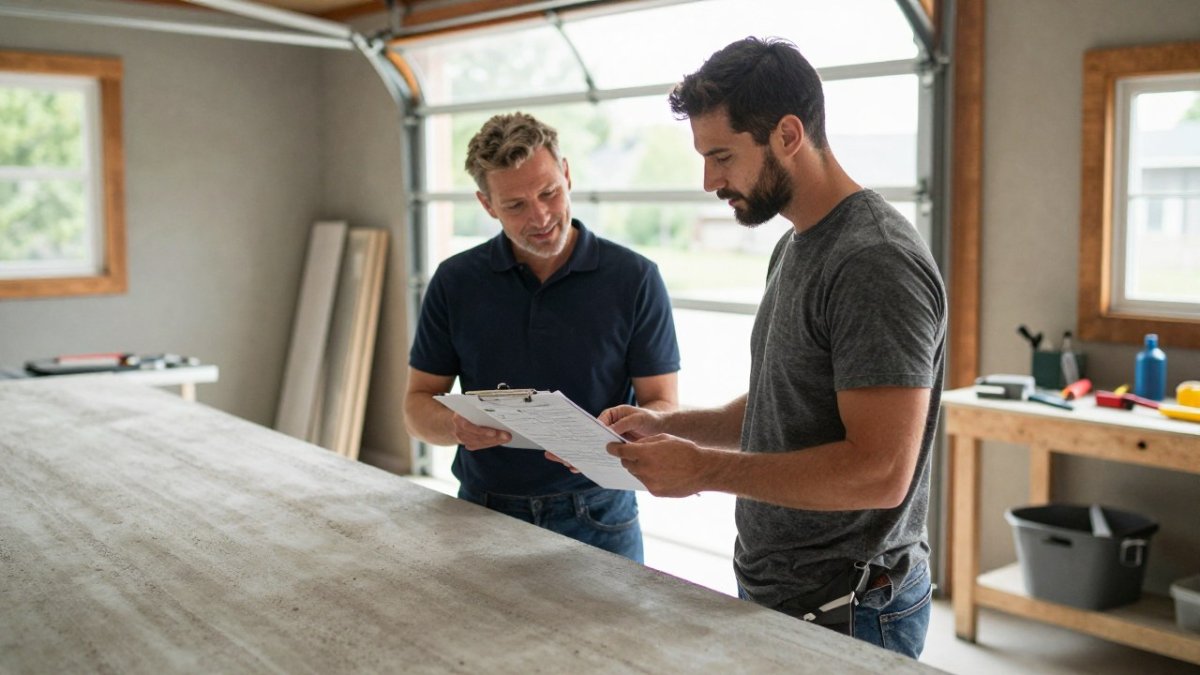
Choosing the right concrete finish for your garage workshop comes down to how you work, what your slab can handle, and how much upkeep you want. That is a lot to weigh alone, and a wrong guess is costly. CTi of Acadiana, LLC offers a free custom estimate, an on-site visual inspection with detailed measurements, and a written estimate by the end of the business day. The Hallmark System is easy to care for and slip safe. Get started with CTi of Acadiana, LLC and finish your workshop floor with confidence.
Frequently Asked Questions
Is a concrete sealer enough for a garage workshop floor?
A concrete sealer for garage floors works well when the slab is sound and you mainly want dust control, easier cleaning, and some stain resistance. It will not hide cracks, level a rough surface, or stand up to dropped tools and solvent spills the way a build coat does. If your workshop sees welding, chemical spills, or heavy rolling loads, a sealer alone usually falls short. Test a small area first and check how the slab handles moisture before committing to sealer as your only finish.
Is polished concrete slippery when wet?
Polished concrete can be slick when wet, especially at higher gloss levels. The fix is a slip-resistant profile: a matte or satin finish, a light brush or hone texture, or an anti-slip additive in the final guard. In a garage workshop, oil and sawdust make the risk worse than plain water, so plan traction around the messes you actually make.
What is the difference between epoxy and polyaspartic garage floor coatings?
Epoxy and polyaspartic are two common coating options, and the right choice depends on your timeline, sun exposure, and how hard the floor gets used.
Can you stain a concrete garage floor?
Yes. Concrete stain for garage floors is one option for workshops that want color without a thick film, and it is generally applied to prepared concrete.

No responses yet